

New Patient Evaluation “The Speech”
I call this “The Speech”. In specialty care we see the same conditions over and over, so I tend to go through this pretty quickly in the office. Excluding abdominal pain and headaches which we don’t treat, the vast majority of pain is caused by muscles, joints or nerves. Muscles can be painful but are not serious and rarely a long-term source of pain or disability. People use anti-inflammatory medicines like Motrin or Aleve, muscle relaxants, heat or ice, stretching or physical therapy, or chiropractic. We don’t see a lot of this in an interventional spine clinic.
So, it’s mainly joints or nerves and both have two things that contribute. There is underlying structural degeneration which happens slowly over years and decades, and this can be seen on imaging tests of X-rays and MRI’s. What can’t be detected on any test is inflammation. Typically, when the pain starts there was something that began an episode of inflammation and then the degeneration that was already there with no symptoms along with the inflammation which is new, together causes the pain. There is no test that can detect or measure this inflammation, so we start the treatment by doing what is known to be needed to resolve the inflammation, then if there are any residual symptoms it is from the structure. People are dramatically better, usually completely better by resolving the inflammation and that is done with injections under X-ray guidance. Medications treat the symptoms of pain; we are trying to treat the source and then there is no pain.
The medicine injected is steroids, but ours is more potent than the commonly known ones like prednisone or cortisone. It is also preservative free, so it is safe to use in the spine and skeleton. When people take oral steroids, the medication is distributed throughout the whole body so only a small amount is at the source of the pain and even if it helps it rarely lasts. The trick is getting the steroids placed at the location of the problem and that is done with X-ray guided injections.
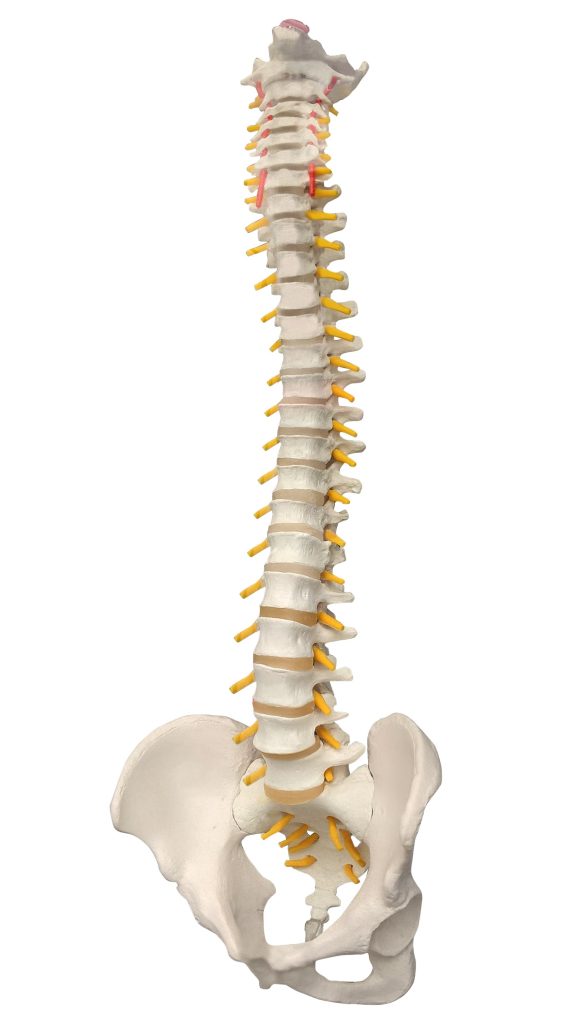
There are four ways we can determine what the source of the pain is. There is the location of pain, physical exam, test results and most importantly is the modifying factors. There is more than one condition that can cause either back and leg pain or neck and arm pain. When it is skeletal and joints pain is most severe standing and walking because that is when there is the most pressure on the joints. When it is a spinal source of back and leg pain it is usually the most severe sitting because that is when there is the highest pressure in the intervertebral discs. We use the location of pain, modifying factors and test results to determine the source of the pain and then do injections under X-ray guidance for treatment.
When joints are the source of the pain usually a single injection is sufficient to resolve the inflammation. That is because these are synovial joints and are contained within a fibrous capsule, so once the medication gets there it stays there. Because of the capsule there is an inside and an outside and this is why people can feel worse over winter. With the barometric pressure changes of storms, the capsule becomes distended and that is why people with arthritis feel worse in winter.
For neurologic pain patients are dramatically better after the initial treatment as the inflammation is reduced, but when the inflammatory episode is well established and been present over a month it takes two injections for healing. There are two types of injections for neurologic pain of spinal stenosis. One is epidural steroids. Epidurals are the same thing we do for women in labor, but rather than using numbing for delivery we use steroids for inflammation, but the procedure is the same and even easier using X-ray. Epidurals place the medicine centrally where the nerves originate, and the medicine can go both right and left and to multiple levels. The other injection is a nerve root injection where the steroids are placed where the nerves exit the spine. This can only be done if we know which nerves are the source of the pain.
Most people return after the initial treatment and the pain is no longer constant, becomes intermittent and at least half gone. With this response we repeat the same procedure. If the response is less than this, we do the other type of procedure. These are so effective we have patients with complete relief every day. However, for an individual patient we cannot predict the response because the inflammation we are treating cannot be measured on any test. So, we begin by doing what is known to resolve the inflammation, which is two shots, and if there is any residual pain then that is the portion that is from the underlying structural degeneration.

Understanding Our Pain Management Approach
During a new patient visit, we often provide what we call “The Speech.” In a specialty clinic, we see many of the same conditions every day, so this overview helps patients clearly understand how Pain Management works and what to expect from treatment. Our goal is not just to reduce discomfort, but to identify and treat the true source of pain for long-term relief.
What Causes Most Pain?
With the exception of abdominal pain and headaches, which we do not treat, the vast majority of chronic pain originates from muscles, joints, or nerves. Muscle-related pain is common, but it is rarely serious or a long-term cause of disability. Muscle pain often responds well to conservative treatments such as anti-inflammatory medications (like Motrin or Aleve), muscle relaxants, heat or ice therapy, stretching, physical therapy, or chiropractic care. Because these conditions typically improve without intervention, we do not see them often in an interventional Pain Management clinic.
Instead, most patients we treat are experiencing pain caused by joints or nerves.
Degeneration vs. Inflammation: The Real Source of Pain
Joint and nerve pain usually have two contributing factors:
-
Structural degeneration – This develops slowly over many years or decades and can be seen on imaging studies such as X-rays or MRIs.
-
Inflammation – This is the key driver of pain, yet it cannot be detected or measured by any imaging or laboratory test.
Often, an inflammatory episode is triggered by an activity or event. When inflammation develops in an area that already has underlying degeneration, pain begins. In Pain Management, our primary focus is treating this inflammation first. Once inflammation is resolved, many patients experience dramatic improvement—or complete pain relief. Any remaining symptoms are typically due to the structural degeneration itself.
Treating the Source, Not Just the Symptoms
Medications taken by mouth mainly treat pain symptoms. Our Pain Management approach targets the actual source of pain. We do this using X-ray–guided injections that deliver medication precisely where it is needed.
The medication we use is a preservative-free steroid, which is stronger than commonly known oral steroids like prednisone or cortisone. Because it is injected directly at the problem site, it works more effectively and lasts longer. Oral steroids circulate throughout the entire body, leaving only a small amount at the pain source, which is why relief from pills is often short-lived. Precision is the key to successful Pain Management.
How We Identify the Source of Pain
There are four main ways we determine where pain is coming from:
-
Location of pain
-
Physical examination
-
Imaging and test results
-
Modifying factors (the most important)
For example, joint-related pain is usually worse when standing or walking due to increased pressure on the joints. In contrast, spinal disc–related nerve pain is often worse when sitting, which increases pressure within the discs. By combining these factors, we can accurately diagnose the pain source and tailor a Pain Management treatment plan using targeted injections.
Joint Pain vs. Nerve Pain Treatment
When joints are the pain source, a single injection is often enough. Joint spaces are enclosed by a capsule, allowing the medication to stay where it is placed. This capsule is also why arthritis pain may worsen during cold weather or storms, as barometric pressure changes can increase joint pressure.
Neurologic pain, such as pain caused by spinal stenosis, usually requires a different Pain Management strategy. Patients often feel significant relief after the first injection, but if inflammation has been present for more than a month, two injections are typically needed for full healing.
There are two main types of injections for nerve pain:
-
Epidural steroid injections, which place medication centrally where nerves originate
-
Nerve root injections, which target specific nerves as they exit the spine
Both are performed safely and accurately using X-ray guidance.
What Results Can You Expect?
After initial Pain Management treatment, most patients report that pain is no longer constant, becomes intermittent, and is reduced by at least 50%. If this response occurs, the same procedure is repeated. If improvement is less significant, a different injection approach may be used.
These treatments are highly effective, and many patients experience complete, lasting relief. Because inflammation cannot be measured, individual responses vary. However, by following proven Pain Management protocols and addressing inflammation first, we give patients the best possible chance at long-term pain relief and improved quality of life.
If you’re living with chronic back, neck, or nerve pain, expert Pain Management can make a life-changing difference. Contact Coastal Carolinas Interventional Spine today to schedule your comprehensive evaluation and take the first step toward lasting pain relief.
Coastal Carolinas Interventional Spine
416 Main Street
North Myrtle Beach, SC 29582
(910) 755-6060
https://www.coastalcarolinasinterventionalspine.com/
[email protected]
Coastal Carolinas Interventional Spine
10 Doctor Circle
Suite #2
Supply, NC 28462