

Back and Leg Pain
Medically reviewed — Coastal Carolinas Interventional Spine
There are two conditions that can cause the exact same distribution of pain in the back and leg. These are the hip or the spine. When it is the hip groin pain is prominent and much more severe with walking since that is when the joint has the most pressure. The hip joint can be stressed on physical exam to determine if this reproduces the pain.
Spinal stenosis is narrowing of the spinal cord and is a very common source of back and leg pain. It is the most common condition we treat. It is often worse sitting because that increases the pressure in the intervertebral discs between the vertebra bones. Each of the nerves that exit the lumbar spine has known complete distributions. L3 is in the front of the thigh to the knee, L4 is to the outside of the calf, L5 is in the front of the shin to the big toe, and S1 is to the heel or sole of the foot. Pain in the buttock is very common with all of them and it’s not unusual to not have this full distribution. A spinal source can be tested for a physical exam and an MRI can confirm as well. This is also known as slipped disc, herniated disc, sciatica, or pinched nerve.
Whatever structural degeneration of stenosis that is seen on MRI has likely been there with little or no symptoms, and when the pain began or got worse something happened that caused the other problem of inflammation to begin. Then the narrowing that was already there and the inflammation which is new together cause the pain. The pain is dramatically better, usually completely better by getting rid of the inflammation and that is done with shots under X-ray guidance. Most patients come back after the initial treatment and the pain is no longer constant, becomes intermittent and at least half gone. The improvement is because the inflammation is less, but when the episodes of inflammation are well established and been present for over a month it takes two injections to resolve all the inflammation. With that initial response the second injection is the same as the first. If the response is less than that we do the other type of injection.
There are two types of injections for spinal stenosis. Epidural steroids are the same as epidurals for women in labor, but rather than using numbing for delivery we use steroids for inflammation, but the procedure is the same and is even easier with using X-ray. This is a common treatment if we know the pain is from a nerve, but we don’t know which nerve. With epidural steroids the medication is placed centrally where the nerves originate, and the medication can help at multiple levels and both sides.
The other type of injection is a nerve root injection, and the medication is placed where the nerves exit the spinal cord. Sometimes we know which nerve to treat based on the precise location of pain or from MRI results. There is also electrodiagnostic testing that can be obtained. When nerves are the source of pain the nerves that are causing the pain also go to certain muscles in the leg and cause cellular changes that can be detected with tiny electrodes. During the testing selected muscles are tested and when we see which muscle has these changes, then we know which nerve is causing the pain and there is a target for selective nerve root injections.
So it takes two injections, the second one may be different than the first one and there are two tests that can be obtained, an MRI or electrodiagnostics which is called an electromyelogram (EMG). These are very effective and complete relief is common, even though the structural stenosis will be ongoing. Then prevention becomes the most important education.

Back and Leg Pain: Causes, Diagnosis, and Advanced Treatment Options
Understanding Back and Leg Pain
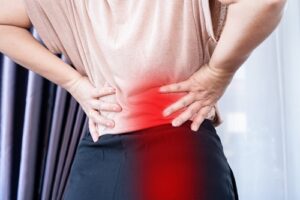
Back and Leg Pain is one of the most common reasons patients seek medical care, and it can significantly interfere with daily activities, work, and quality of life. One of the challenges with Back and Leg Pain is that it can originate from different structures in the body, most commonly the spine or the hip, yet present with very similar symptoms. Determining the true source of the pain is essential for effective treatment and long-term relief.
When the hip joint is the primary cause of Back and Leg Pain, groin pain is often prominent and typically worsens with walking or weight-bearing activities. This occurs because walking places increased pressure on the hip joint. During a physical examination, the hip can be stressed through specific movements to determine whether this reproduces the patient’s pain, helping distinguish hip-related pain from spinal conditions.
Spinal Causes of Back and Leg Pain
One of the most common spinal causes of Back and Leg Pain is spinal stenosis, which is a narrowing of the spinal canal or nerve pathways. This narrowing places pressure on the spinal nerves and is the most frequent condition treated at Coastal Carolinas Interventional Spine. Spinal stenosis and related conditions are often referred to as herniated discs, slipped discs, sciatica, or pinched nerves.
Back and Leg Pain caused by spinal conditions may worsen with sitting, as this position increases pressure within the intervertebral discs. Each nerve exiting the lumbar spine supplies sensation to a specific area of the leg:
-
L3 nerve: Front of the thigh down to the knee
-
L4 nerve: Outside of the calf
-
L5 nerve: Front of the shin extending to the big toe
-
S1 nerve: Heel or sole of the foot
Pain in the buttocks is very common and may accompany any of these nerve distributions. Not every patient experiences the full textbook pattern, which is why professional evaluation is so important.
Why Back and Leg Pain Can Suddenly Appear
Many patients are surprised to learn that the structural changes seen on MRI, such as spinal stenosis, have often been present for years without symptoms. Back and Leg Pain North Myrtle Beach typically begins or worsens when inflammation develops on top of these existing changes. The combination of narrowing and inflammation compresses the nerves, resulting in pain, numbness, tingling, or weakness.
The good news is that treating inflammation can dramatically reduce or completely eliminate Back and Leg Pain, even though the underlying structural changes remain.
Non-Surgical Treatment Options for Back and Leg Pain
At Coastal Carolinas Interventional Spine, we specialize in image-guided injections designed to target inflammation and relieve nerve pressure. These treatments are minimally invasive and performed under X-ray guidance for accuracy and safety.
Epidural Steroid Injections
Epidural steroid injections are similar to epidurals used during childbirth, but instead of numbing medication, a powerful anti-inflammatory steroid is used. The medication is placed centrally where the spinal nerves originate, allowing it to treat multiple nerve levels and both sides of the spine at once. This approach is ideal when Back and Leg Pain is nerve-related, but the exact nerve is unclear.
Most patients experience significant improvement after the first injection, often reporting that their pain is no longer constant and has decreased by at least 50%. When inflammation has been present for more than a month, a second injection is often required to fully resolve symptoms.
Selective Nerve Root Injections
When the exact nerve causing Back and Leg Pain is known, a selective nerve root injection may be used. In this procedure, medication is placed precisely where the affected nerve exits the spine. This targeted approach is especially effective when pain follows a specific nerve distribution.
Advanced Diagnostics for Precise Treatment
In addition to MRI imaging, electrodiagnostic testing, also known as an electromyogram (EMG), may be used to identify the exact nerve causing Back and Leg Pain. EMG testing detects subtle cellular changes in muscles connected to irritated nerves. By identifying the affected muscle groups, physicians can pinpoint the responsible nerve and tailor treatment accordingly.
Long-Term Relief and Prevention
Even though spinal stenosis and degenerative changes remain, most patients achieve complete or near-complete relief from central Back and Leg Pain through targeted interventional treatments. Once pain is controlled, education and prevention become essential. Proper posture, activity modification, and ongoing spine care can significantly reduce future flare-ups and maintain long-term comfort.
Schedule Your Back and Leg Pain Evaluation Today
If Back and Leg Pain is limiting your life, you don’t have to live with it. Coastal Carolinas Interventional Spine offers advanced, non-surgical solutions tailored to your condition.
Coastal Carolinas Interventional Spine
416 Main Street
North Myrtle Beach, SC 29582
(910) 755-6060
https://www.coastalcarolinasinterventionalspine.com/
[email protected]
Coastal Carolinas Interventional Spine
10 Doctor Circle
Suite #2
Supply, NC 28462