
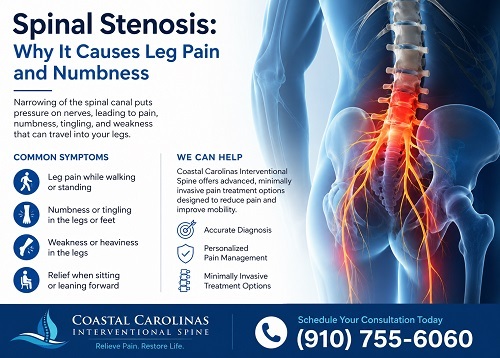

Spinal stenosis is a painful condition that develops when the spaces inside the spine begin to narrow. As this narrowing places pressure on the spinal cord or nearby nerves, many people experience symptoms that extend beyond the back. In fact, spinal stenosis often causes leg pain, numbness, tingling, and weakness that can interfere with walking, standing, and daily activities.
At Coastal Carolinas Interventional Spine, patients receive advanced care focused on identifying the source of nerve compression and creating personalized treatment plans designed to reduce discomfort and improve mobility.
What Is Spinal Stenosis?
Spinal stenosis occurs when the spinal canal narrows and compresses nearby nerves. Although the condition can affect different areas of the spine, lumbar spinal stenosis in the lower back is one of the most common causes of leg pain and numbness.
Several conditions may contribute to spinal stenosis, including:
- Arthritis in the spine
- Herniated discs
- Bone spurs
- Thickened ligaments
- Degenerative disc disease
- Age-related spinal changes
Because the nerves in the lower back control sensation and movement in the legs, pressure on these nerves often causes symptoms that travel downward.
How Spinal Stenosis Leads to Leg Pain
When spinal stenosis compresses the nerves in the lumbar spine, the irritated nerves can send pain signals into the hips, buttocks, thighs, calves, or feet. This condition is commonly called neurogenic claudication.
Many patients notice that the pain worsens while:
- Walking long distances
- Standing for extended periods
- Climbing stairs
- Bending backward
However, leaning forward or sitting down may temporarily relieve symptoms because those positions reduce pressure inside the spinal canal.
The leg pain linked to spinal stenosis may feel like:
- Burning pain
- Cramping
- Aching
- Sharp shooting discomfort
- Heaviness in the legs
Without proper pain treatment, these symptoms can gradually worsen over time.
Why Numbness Happens
Nerves control sensation throughout the body. When spinal stenosis compresses these nerves, communication between the brain and legs becomes disrupted. As a result, patients may experience:
- Tingling sensations
- Pins-and-needles feelings
- Numbness in the legs or feet
- Muscle weakness
- Difficulty balancing
In severe cases, spinal stenosis can affect coordination and walking ability. Therefore, early evaluation is important to prevent long-term nerve damage.
Common Symptoms of Spinal Stenosis
Although symptoms vary from person to person, common signs of spinal stenosis include:
- Lower back pain
- Leg pain while walking
- Numbness in the legs
- Weakness in the feet
- Tingling sensations
- Difficulty standing upright
- Pain relief when sitting or leaning forward
Because many conditions can mimic these symptoms, accurate diagnosis is essential for effective pain management spinal stenosis care.
Diagnosing Spinal Stenosis

At Coastal Carolinas Interventional Spine, specialists perform comprehensive evaluations to determine whether spinal stenosis is causing nerve compression.
Diagnosis may include:
- Physical examinations
- Medical history review
- MRI imaging
- CT scans
- X-rays
- Nerve testing
These evaluations help identify the exact location and severity of nerve pressure so providers can recommend the most effective pain treatment options.
Pain Treatment Options for Spinal Stenosis
Many patients can manage spinal stenosis symptoms without surgery. Treatment plans often focus on reducing inflammation, relieving nerve pressure, and improving mobility.
Common treatment options include:
Physical Therapy
Targeted exercises may strengthen spinal support muscles and improve flexibility.
Epidural Steroid Injections
These injections help reduce inflammation around compressed nerves and may provide significant symptom relief.
Medication Management
Anti-inflammatory medications and nerve pain treatments can help manage discomfort.
Minimally Invasive Procedures
Some patients benefit from advanced interventional procedures designed to reduce nerve compression without major surgery.
Lifestyle Modifications
Weight management, posture correction, and low-impact exercise can reduce stress on the spine.
At Coastal Carolinas Interventional Spine, treatment plans are customized to each patient’s symptoms, activity level, and overall health goals.
When to Seek Medical Help
You should seek medical evaluation if leg pain or numbness:
- Interferes with walking
- Continues to worsen
- Causes weakness
- Disrupts sleep
- Limits daily activities
Early treatment often helps patients avoid worsening nerve damage and maintain better long-term mobility.
Trusted Pain Management for Spinal Stenosis
Finding the right provider matters when dealing with chronic nerve pain. Coastal Carolinas Interventional Spine offers patient-focused care designed to help individuals regain comfort and function.
Patient Review
Homer Cooper
My visit at your facility this morning (05-12-2026) was cordial, informative, and fast.
Schedule an Evaluation Today
If spinal stenosis is causing leg pain, numbness, or difficulty walking, professional care may help relieve your symptoms and improve your quality of life. Contact Coastal Carolinas Interventional Spine today to learn more about advanced pain management spinal stenosis treatment options.
Call Coastal Carolinas Interventional Spine at (910) 755-6060 to schedule your consultation today.
Check our Facebook page for more educational articles
Coastal Carolinas Interventional Spine
416 Main Street
North Myrtle Beach, SC 29582
(910) 755-6060
https://www.coastalcarolinasinterventionalspine.com/
[email protected]
Coastal Carolinas Interventional Spine
10 Doctor Circle
Suite #2
Supply, NC 28462
Areas Served:
Myrtle Beach SC, North Myrtle Beach SC, Little River SC, Shallotte NC, Calabash NC, Supply NC