
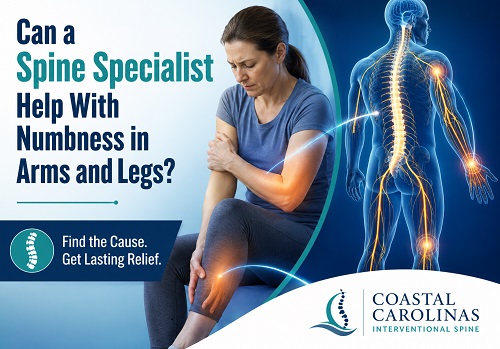
Experiencing numbness in your arms or legs can be alarming, especially when symptoms occur frequently or begin interfering with daily activities and sleep. While temporary numbness may result from sitting or sleeping in an awkward position, persistent symptoms often indicate an underlying medical condition that requires professional evaluation. A spine specialist can play a critical role in identifying the source of these symptoms and developing a treatment plan designed to provide lasting relief.
At Coastal Carolinas Interventional Spine, we help patients uncover the root causes of numbness and discomfort through advanced diagnostic evaluations and minimally invasive treatment options.
Understanding Numbness in Arms and Legs
Numbness occurs when normal nerve signals are disrupted. This may cause a loss of sensation, tingling, weakness, burning sensations, or a “pins and needles” feeling. Because the spinal cord and nerves control sensation throughout the body, many cases of numbness in arms and legs can be traced back to spinal conditions.
A spine specialist evaluates how the nerves, spinal cord, and surrounding structures may be contributing to these symptoms.
Common Causes of Numbness
There are several potential causes of numbness, ranging from mild nerve irritation to more serious spinal disorders. Some of the most common causes include:
- Herniated discs
- Spinal stenosis
- Degenerative disc disease
- Pinched nerves
- Cervical spine disorders
- Lumbar spine conditions
- Sciatica
- Spinal arthritis
- Nerve compression syndromes
- Previous spinal injuries
When nerves become compressed or irritated, the signals traveling between the brain and the affected limbs can be disrupted, leading to numbness, tingling, and weakness.
How a Spine Specialist Diagnoses Numbness
A spine specialist begins with a comprehensive evaluation to determine whether your symptoms originate from the spine or another source.
The diagnostic process may include:
Medical History Review
Your provider will discuss:
- When symptoms began
- Which areas are affected
- Whether numbness is constant or intermittent
- Activities that worsen symptoms
- Associated pain or weakness
Physical Examination
A thorough neurological examination helps assess:
- Reflexes
- Muscle strength
- Sensation changes
- Range of motion
- Walking and balance
Diagnostic Imaging
Advanced imaging may be recommended to identify structural problems affecting nerves, including:
- MRI scans
- CT scans
- X-rays
- Diagnostic nerve studies
These tools help pinpoint the exact location of nerve compression and guide treatment decisions.
Spinal Conditions That Can Cause Arm Numbness
When numbness affects the arms or hands, the problem often originates in the cervical spine, which is located in the neck.
Common cervical spine conditions include:
Cervical Herniated Disc
A damaged disc in the neck can press against nearby nerves, causing symptoms that radiate into the shoulders, arms, and hands.
Cervical Spinal Stenosis
Narrowing of the spinal canal can place pressure on the spinal cord and nerve roots, leading to numbness, weakness, and coordination problems.
Cervical Radiculopathy
This condition occurs when a nerve root becomes compressed, causing pain, tingling, or numbness that travels down the arm.
Spinal Conditions That Can Cause Leg Numbness
Numbness in the legs often originates from the lumbar spine, located in the lower back.
Lumbar Herniated Disc
A herniated disc in the lower back can compress nerves that travel into the legs and feet.
Sciatica
Sciatica develops when the sciatic nerve becomes irritated or compressed. Symptoms may include:
- Leg numbness
- Tingling sensations
- Burning pain
- Weakness in the affected leg
Lumbar Spinal Stenosis
As the spinal canal narrows, pressure on the nerves can cause numbness, weakness, and difficulty walking.
When Numbness Requires Immediate Medical Attention
While some cases of numbness develop gradually, certain symptoms require prompt evaluation.
Seek immediate medical care if numbness occurs with:
- Sudden weakness
- Loss of bowel or bladder control
- Difficulty walking
- Severe neck or back pain
- Loss of coordination
- Symptoms affecting both sides of the body
These signs may indicate significant nerve or spinal cord compression.
Treatment Options a Spine Specialist May Recommend
Once the cause of numbness has been identified, a spine specialist can recommend a personalized treatment plan.
Treatment options may include:
Physical Therapy
Targeted exercises help improve mobility, strengthen supporting muscles, and reduce pressure on irritated nerves.
Medication Management
Anti-inflammatory medications and nerve pain treatments may help control symptoms during recovery.
Epidural Steroid Injections
These minimally invasive injections can reduce inflammation around compressed nerves and provide significant symptom relief.
Facet Joint Injections
For patients whose symptoms are related to spinal arthritis, facet joint injections may help reduce inflammation and improve function.
Advanced Interventional Procedures
At Coastal Carolinas Interventional Spine, advanced minimally invasive treatments are available to address many spinal pain conditions without major surgery.
Why Early Evaluation Matters
Ignoring numbness can allow underlying spinal problems to worsen over time. Early diagnosis often leads to more effective treatment and may help prevent permanent nerve damage.
Many patients discover that symptoms they assumed were temporary actually stem from treatable spinal conditions. The sooner a spine specialist evaluates the problem, the sooner an effective treatment plan can begin.
Finding Relief From Numbness in Arms and Legs
Persistent numbness should never be ignored. Whether symptoms originate in the neck, back, or surrounding nerves, a qualified spine specialist can identify the cause and recommend treatments designed to improve function and quality of life.
At Coastal Carolinas Interventional Spine, our team specializes in diagnosing and treating spinal conditions that contribute to numbness, tingling, weakness, and chronic pain. We are committed to helping patients find answers and regain control of their lives.
If you are experiencing numbness in arms and legs, don’t wait for symptoms to worsen. Contact Coastal Carolinas Interventional Spine today to schedule a consultation and learn about treatment options that may help restore comfort and mobility.
Check our Facebook page for more educational articles
Coastal Carolinas Interventional Spine
416 Main Street
North Myrtle Beach, SC 29582
(910) 755-6060
https://www.coastalcarolinasinterventionalspine.com/
info@ccispine.com
Coastal Carolinas Interventional Spine
10 Doctor Circle
Suite #2
Supply, NC 28462
Areas Served:
Myrtle Beach SC, North Myrtle Beach SC, Little River SC, Shallotte NC, Calabash NC, Supply NC