
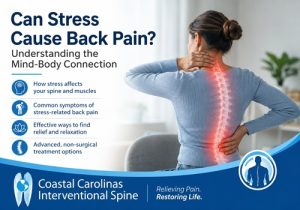
Back pain is one of the most common reasons people seek medical care. While injuries, disc problems, and arthritis are common causes, many people are surprised to learn that stress can also trigger or worsen chronic discomfort. If you have ever noticed your muscles tightening during a stressful day, you may have already experienced the connection between stress and back pain.
At Coastal Carolinas Interventional Spine, many patients dealing with chronic pain discover that emotional stress plays a major role in their symptoms. Understanding how stress affects the body can help you find the right treatment and long-term relief.
How Stress Can Cause Back Pain
When the body experiences stress, it enters a “fight or flight” response. During this process, stress hormones increase muscle tension and inflammation throughout the body. Over time, this ongoing tension can place significant strain on the spine and surrounding muscles.
Common ways stress contributes to back pain include:
- Tightening of muscles in the neck, shoulders, and lower back
- Poor posture caused by tension or fatigue
- Increased inflammation around muscles and joints
- Heightened nerve sensitivity that makes pain feel worse
- Reduced physical activity due to anxiety or emotional exhaustion
As a result, even mild stress can gradually lead to chronic discomfort if left untreated.
Symptoms of Stress-Related Pain
Stress-related pain often feels different from pain caused by a physical injury. Instead of sharp or sudden pain, symptoms usually develop gradually and fluctuate throughout the day.
You may experience:
- A dull ache in the lower back
- Tightness between the shoulder blades
- Neck and upper back stiffness
- Muscle spasms during stressful situations
- Pain that worsens after emotional stress or anxiety
- Tension headaches connected to neck pain
Many patients notice that their symptoms improve during vacations, weekends, or periods of relaxation.
Stress-Related Pain vs. Structural Back Problems
Although stress can absolutely contribute to back pain, it is important to rule out structural spinal conditions. Herniated discs, spinal stenosis, arthritis, and pinched nerves may also cause similar symptoms.
Your pain may be more related to stress if:
- There was no recent injury or accident
- Symptoms come and go with emotional stress
- Stretching or relaxation improves the discomfort
- The pain feels tight or aching rather than sharp
However, medical evaluation is important if your pain:
- Radiates into the legs or hips
- Causes numbness or tingling
- Includes weakness in the arms or legs
- Began after a car accident or workplace injury
- Interferes with sleep or daily activities
Ways to Relieve Stress-Related Back Pain at Home
Several simple strategies may help reduce muscle tension and improve mobility.
Gentle Stretching
Stretching the lower back, hips, shoulders, and neck can reduce tightness and improve flexibility.
Heat Therapy
Heating pads or warm showers increase circulation and help relax tense muscles.
Walking and Light Exercise
Movement improves blood flow and reduces stiffness caused by prolonged sitting or tension.
Deep Breathing Exercises
Controlled breathing helps calm the nervous system and lowers muscle tension throughout the body.
Better Posture
Maintaining proper posture reduces strain on the spine, especially during long workdays or stressful situations.
Stress Management Techniques
Mindfulness, meditation, and relaxation exercises can help lower stress levels that contribute to chronic pain.
Medical Treatment for Chronic Back Pain
If your symptoms continue despite home care, professional treatment may be necessary. At Coastal Carolinas Interventional Spine, we provide non-surgical solutions designed to target the source of pain and improve quality of life.
Treatment options may include:
- Epidural steroid injections
- Trigger point injections
- Facet joint injections
- Nerve blocks
- Personalized rehabilitation programs
These treatments can help reduce inflammation, relieve muscle tension, and restore mobility.
When to See a Back Pain Specialist
Persistent back pain should never be ignored. Even when stress is involved, underlying spinal conditions may also be contributing to your symptoms. Early evaluation can help prevent worsening pain and long-term complications.
At Coastal Carolinas Interventional Spine, our team focuses on identifying the root cause of your discomfort and developing a personalized treatment plan that fits your needs.
Stress and chronic tension can have a serious impact on your spine and overall health. Fortunately, effective treatment is available. Coastal Carolinas Interventional Spine offers advanced, non-surgical pain management solutions designed to help patients regain comfort and mobility.
Call Coastal Carolinas Interventional Spine today at (910) 755-6060 to schedule your consultation and learn more about treatment options for chronic back pain.
Coastal Carolinas Interventional Spine
416 Main Street
North Myrtle Beach, SC 29582
(910) 755-6060
https://www.coastalcarolinasinterventionalspine.com/
info@ccispine.com
Coastal Carolinas Interventional Spine
10 Doctor Circle
Suite #2
Supply, NC 28462
Areas Served:
Myrtle Beach SC, North Myrtle Beach SC, Little River SC, Shallotte NC, Calabash NC, Supply NC