
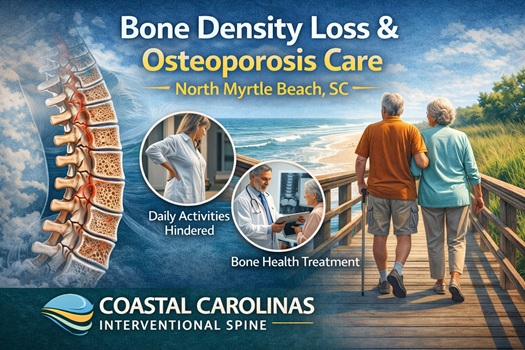
Bone density loss, commonly known as osteoporosis, affects millions of adults across the United States and often develops quietly over time. Many people do not realize there is an issue until pain, stiffness, or a fracture disrupts everyday life. In active coastal communities like North Myrtle Beach, bone density loss can significantly affect independence, comfort, and the ability to enjoy daily routines.
As residents age, maintaining mobility becomes increasingly important for staying engaged with family, hobbies, and the outdoors. Bone density loss weakens the skeletal structure that supports movement, balance, and posture. Without proper care, this condition can slowly limit activities that once felt effortless.
Understanding Osteoporosis and Bone Density Loss
Osteoporosis occurs when bone mass decreases faster than the body can rebuild it. Bones become thinner, weaker, and more prone to fractures even during low-impact activities. The spine, hips, wrists, and shoulders are especially vulnerable because they absorb much of the body’s weight and movement.
Several factors increase the risk of developing osteoporosis. Age is a major contributor, particularly for adults over 50. Hormonal changes, family history, smoking, certain medications, low calcium intake, and limited physical activity all play a role. Because bone density loss progresses gradually, many people in North Myrtle Beach continue normal activities without realizing their bones are becoming more fragile.
How Osteoporosis Affects Everyday Activities
Walking and Balance
Bone density loss can alter posture and weaken the spine, which directly affects balance and coordination. Even short walks on uneven pavement, beach access paths, or stairways can feel unstable. Reduced balance increases the likelihood of falls, which are one of the most common causes of fractures in people with osteoporosis.
Sitting, Standing, and Bending
Daily movements such as sitting down, standing up, or bending to reach low shelves can strain weakened vertebrae. Compression fractures in the spine may develop slowly, leading to stiffness, height loss, or sharp pain during routine movements. Over time, these limitations can make everyday tasks feel physically exhausting.
Recreation and Outdoor Activities
Many North Myrtle Beach residents enjoy outdoor activities such as fishing, golfing, gardening, and walking near the shoreline. Osteoporosis can reduce flexibility and endurance, making it harder to participate comfortably. Fear of injury may also lead people to avoid activities they once enjoyed, which can further weaken bones due to reduced movement.
Sleep and Daily Comfort
Spinal compression and joint discomfort can interfere with restful sleep. Difficulty finding a comfortable sleeping position often leads to poor rest, increased fatigue, and slower recovery during the day. Ongoing discomfort may also affect mood and overall well-being.
Household Tasks and Independence
Carrying groceries, lifting laundry baskets, or performing light household chores can place stress on fragile bones. Without proper guidance and care, these tasks increase fracture risk and may cause people to rely more heavily on others for assistance.
Why Spine Health Matters with Osteoporosis
The spine plays a central role in posture, movement, and nerve protection. Osteoporosis frequently affects the vertebrae, leading to compression fractures that may go unnoticed at first. Over time, these fractures can cause chronic back pain, spinal curvature, reduced lung capacity, and limited mobility.
Protecting spine health is essential for maintaining independence and reducing long-term complications. Early evaluation helps identify subtle changes before serious injury occurs.
How Coastal Carolinas Interventional Spine Supports Osteoporosis Care
Coastal Carolinas Interventional Spine provides specialized care focused on preserving mobility and reducing pain associated with bone density loss. Treatment plans are designed to address both symptoms and underlying structural concerns.
Advanced Diagnostic Imaging
Detailed imaging helps identify vertebral fractures, nerve compression, and degenerative changes related to osteoporosis. Early detection allows for targeted care before conditions worsen.
Minimally Invasive Pain Management
Interventional treatments such as targeted injections may help relieve inflammation, nerve irritation, and joint pain without the need for surgery. These options support comfort while protecting spinal stability.
Personalized Non-Surgical Care
Treatment plans are tailored to each patient’s condition, activity level, and overall health. The goal is to reduce pain, improve function, and minimize reliance on long-term medication.
Movement and Lifestyle Guidance
Patients receive education on safe movement, posture, and daily habits that reduce fall and fracture risk. This guidance supports long-term independence and confidence in daily activities.
Staying Active and Safe with Osteoporosis
Living well with bone density loss involves proactive care and informed choices. Low-impact exercise such as walking or swimming helps maintain strength and balance. Adequate calcium and vitamin D intake supports bone health, while home safety adjustments reduce fall risks.
Regular bone density screenings and early intervention play a key role in slowing disease progression and preserving quality of life.
Trusted Osteoporosis and Spine Care in North Myrtle Beach
Bone density loss does not have to limit independence or enjoyment of daily life. With proper spine care and targeted treatment, many people continue to stay active and comfortable. Coastal Carolinas Interventional Spine proudly serves North Myrtle Beach and nearby communities, offering comprehensive care designed to protect mobility and long-term wellness.
Questions About Bone Density Loss and Osteoporosis
Can osteoporosis cause back pain without a fracture?
Yes. Bone thinning can lead to posture changes, muscle strain, and joint stress that cause discomfort even without a visible fracture.
How is osteoporosis diagnosed?
Bone density scans such as DEXA tests measure bone strength and help assess fracture risk.
Can osteoporosis be reversed?
Bone loss is not usually reversible, but proper treatment, nutrition, and activity can slow progression and improve bone strength.
Is exercise safe with osteoporosis?
Yes. Guided, low-impact exercise improves balance, strength, and overall bone health when performed safely.
When should I see a spine specialist?
If you experience persistent back pain, reduced mobility, or have a history of fractures, a spine evaluation is recommended.
If bone density loss is starting to affect your comfort, movement, or confidence, now is the right time to take action. Schedule an evaluation with Coastal Carolinas Interventional Spine to receive personalized osteoporosis and spine care focused on protecting mobility, reducing pain, and helping you stay active safely in North Myrtle Beach.
Check our Facebook page for more educational articles.
Coastal Carolinas Interventional Spine
416 Main Street
North Myrtle Beach, SC 29582
(910) 755-6060
https://www.coastalcarolinasinterventionalspine.com/
[email protected]
Coastal Carolinas Interventional Spine
10 Doctor Circle
Suite #2
Supply, NC 28462
Areas Served:
Myrtle Beach SC, North Myrtle Beach SC, Little River SC, Shallotte NC, Calabash NC, Supply NC