
Neck and arm pain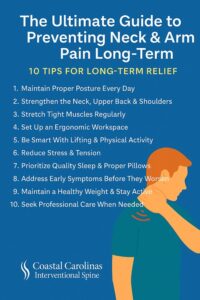 are more common today than ever before. Between long hours spent on phones and computers, poor posture, repetitive motion, and natural aging changes, the cervical spine endures constant stress. While pain flare-ups happen, the good news is that long-term prevention is absolutely possible with the right habits and professional guidance.
At Coastal Carolinas Interventional Spine, we help patients not only find relief but also build healthier routines that keep pain from returning. This comprehensive guide to neck and arm pain explains what causes chronic neck and arm pain—and more importantly, how to prevent it for the long run.
Understanding the Root Causes of Neck And Arm Pain
Long-term prevention starts with understanding why pain develops. Common contributors include:
- Poor posture (“tech neck”)
- Degenerative disc disease
- Nerve compression
- Repetitive strain from work or hobbies
- Weak or imbalanced muscles
- Improper lifting techniques
- Stress and tension
- Arthritis or age-related changes
- Past injuries
Each of these adds stress to the cervical spine, often leading to inflammation, nerve irritation, or radiating pain into the shoulders and arms.
1. Maintain Proper Posture Every Day
- Posture is one of the biggest factors in neck and arm pain. To protect your spine keep screens at eye level.
- Looking downward places up to 60 lbs. of pressure on the neck. Support your lower back. A supported lumbar spine helps align the neck naturally.
- Follow the “20-20-20 Rule” – Every 20 minutes, take 20 seconds to look 20 feet away.
- Avoid cradling the phone. Use earbuds or speakerphone to reduce strain on the neck and shoulders.
2. Strengthen the Neck, Upper Back & Shoulders
Weak muscles lead to instability and overcompensation, which increases pain. Simple, effective exercises include:
- Chin tucks
- Scapular squeezes
- Upper back extensions
- Resistance-band rows
- Shoulder blade mobility drills
Strength training creates long-term structural support for the cervical spine.
3. Stretch Tight Muscles Regularly
Tight muscles in the neck, chest, or shoulders can pull your posture out of alignment and compress nerves. Daily stretching can significantly reduce this tension.
Try incorporating:
- Upper trapezius stretches
- Levator scapulae stretches
- Chest/pec stretches
- Gentle neck rotations
Just 5–10 minutes per day can make a dramatic difference.
4. Set Up an Ergonomic Workspace
Your workspace has a major impact on the health of your neck and arms.
Ergonomic essentials:
- Monitor at eye level
- Arms resting comfortably at 90 degrees
- Chair with lumbar support
- Feet flat on the floor
- Keyboard close enough to avoid reaching
These small shifts can dramatically reduce repetitive strain.
5. Be Smart With Lifting & Physical Activity
Improper lifting is a major cause of neck and shoulder injuries.
Follow these guidelines:
- Keep objects close to the body
- Lift with your legs, not your back
- Avoid twisting while lifting
- Ask for help with heavy items
If you engage in repetitive sports or activities (golf, tennis, weightlifting), incorporate warm-ups and cool-downs to protect joint and muscle health.
6. Reduce Stress & Tension
Stress causes the neck and shoulders to tighten, often leading to long-term pain. Managing stress helps break this cycle.
Helpful tools include:
- Deep breathing exercises
- Meditation
- Massage therapy
- Yoga or gentle stretching
- Regular physical activity
Mind-body balance is a powerful tool for spine health.
7. Prioritize Quality Sleep & Proper Pillows
Sleeping in the wrong position can undo all your daytime efforts.
Best sleep practices:
- Sleep on your back or side (not your stomach)
- Use a pillow that supports the natural curve of your neck
- Avoid overly high or stiff pillows
- Keep screens out of the bedroom to prevent tension before bed
A supportive sleep environment greatly reduces morning neck and arm pain.
8. Address Early Symptoms Before They Worsen
One of the biggest mistakes people make is ignoring early warning signs such as:
- Intermittent numbness or tingling
- Shoulder or arm fatigue
- Occasional radiating pain
- Persistent stiffness
Early evaluation helps prevent small issues from becoming chronic conditions.
9. Maintain a Healthy Weight & Stay Active
Extra weight increases strain on the spine, while inactivity weakens important supportive muscles. A balanced diet and regular movement help reduce inflammation and pressure on the neck.
10. Seek Professional Care When Needed
Even with the best habits, some conditions—such as herniated discs, arthritis, or nerve compression—require expert care.
At Coastal Carolinas Interventional Spine, our specialists offer:
- Advanced diagnostics
- Minimally invasive treatments
- Targeted pain management
- Customized physical therapy guidance
- Long-term spine health planning
We focus on relieving neck and arm pain and preventing it from returning.
Long-Term Prevention Is Possible
Preventing neck and arm pain isn’t about one habit—it’s about a lifestyle that protects and supports your spine. With proper posture, ergonomics, strengthening, stretching, and professional care when needed, you can significantly reduce pain and improve your long-term quality of life.
Schedule Your Consultation With Coastal Carolinas Interventional Spine
If you’re experiencing ongoing neck and arm pain—or simply want to prevent future problems—our specialists are here to help. Call today to schedule an appointment.
Check our Facebook page for more educational articles.
Coastal Carolinas Interventional Spine
416 Main Street
North Myrtle Beach, SC 29582
(910) 755-6060
https://www.coastalcarolinasinterventionalspine.com/
[email protected]
Coastal Carolinas Interventional Spine
10 Doctor Circle
Suite #2
Supply, NC 28462
Areas Served:
Myrtle Beach SC, North Myrtle Beach SC, Little River SC, Shallotte NC, Calabash NC, Supply NC