
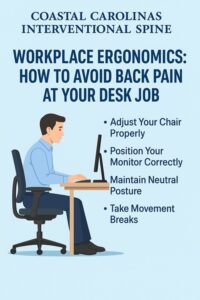
Back pain has become one of the most common work-related health complaints in the United States—especially for people with desk jobs. Long hours of sitting, poor posture, and improper workstation setup can all contribute to chronic discomfort. At Coastal Carolinas Interventional Spine, we help patients identify the causes of their back pain and provide effective solutions to prevent it. One of the most powerful preventative tools is proper workplace ergonomics.
In this guide, we’ll explain why ergonomics matter, how they affect your spine, and what steps you can take to protect your back throughout the workday.
Why Workplace Ergonomics Matter
Most desk workers spend 8 to 10 hours a day sitting. Unfortunately, sitting places more pressure on the spine than standing, especially when posture begins to slump. Over time, poor ergonomics can lead to:
- Lower back pain
- Neck stiffness
- Pinched nerves
- Sciatica
- Muscle fatigue
- Headaches
- Carpal tunnel syndrome
Proper ergonomics ensures that your body is supported, aligned, and comfortable. When your workstation is set up correctly, you reduce strain on your spine and improve productivity, focus, and overall well-being.
Common Causes of Back Pain at a Desk Job
Understanding the root causes of workplace-related back pain can help prevent long-term problems. Some of the most common issues include:
Poor Posture
Slouching, leaning forward, or craning the neck toward the screen places unnecessary strain on the spine.
Incorrect Chair Height
When your chair is too high or too low, your hips and knees fall out of alignment, increasing pressure on your lower back.
Improper Monitor Placement
A monitor that’s too low or too far away encourages forward head posture, which can lead to upper back and neck pain.
Sedentary Work Habits
Remaining in one position for hours at a time reduces blood flow to the spine and weakens core muscles.
Unsupported Lower Back
Without lumbar support, the natural curve of your spine collapses, contributing to chronic pain.
How to Create an Ergonomic Workspace
Small adjustments can make a big difference in preventing back pain. Here’s how to build a spine-friendly office setup:
1. Adjust Your Chair Properly
- Choose a chair with built-in lumbar support or add a cushion.
- Keep your feet flat on the floor or on a footrest.
- Ensure your hips are level with or slightly higher than your knees.
Sit back fully so the chair supports your spine.
2. Position Your Monitor Correctly
- The top of the screen should be at or slightly below eye level.
- Keep the monitor about an arm’s length away.
- Use a riser or stack of books if the screen is too low.
3. Maintain Neutral Posture
Your ears, shoulders, and hips should be aligned. Avoid leaning forward or tilting your head down for long periods.
4. Keep Your Keyboard and Mouse Close
Your elbows should stay close to your body with forearms parallel to the floor. This reduces shoulder and upper back strain.
5. Take Movement Breaks
Every 30–60 minutes:
- Stand
- Stretch
- Walk for 1–2 minutes
- Roll your shoulders or gently twist your torso
Frequent movement rejuvenates the spine and reduces stiffness.
6. Consider a Sit-Stand Desk
Alternating between sitting and standing throughout the day can relieve pressure on your spine and improve circulation.
Strengthening Your Back While You Work
Incorporating light exercises into your day can help prevent back pain:
- Seated spinal twist
- Shoulder rolls
- Neck stretches
- Core-strengthening exercises before or after work
A strong core supports your spine and helps maintain proper posture naturally.
When to Seek Professional Help
If back pain persists despite making ergonomic changes, it may be time to consult a spine specialist. Conditions such as herniated discs, sciatica, or facet joint irritation can worsen without treatment.
At Coastal Carolinas Interventional Spine, we offer advanced diagnostic evaluations and minimally invasive treatments to help you find lasting back pain relief.
Protect Your Spine—and Your Productivity
Workplace ergonomics play a crucial role in maintaining spinal health, especially for office workers. With the right setup and daily habits, you can dramatically reduce your risk of back pain and improve your overall comfort at work.
If you’re struggling with persistent back pain, contact Coastal Carolinas Interventional Spine today to schedule a consultation. Our team is here to help you feel better, move better, and work better.
Check our Facebook page for more educational articles.
Coastal Carolinas Interventional Spine
416 Main Street
North Myrtle Beach, SC 29582
(910) 755-6060
https://www.coastalcarolinasinterventionalspine.com/
[email protected]
Coastal Carolinas Interventional Spine
10 Doctor Circle
Suite #2
Supply, NC 28462
Areas Served:
Myrtle Beach SC, North Myrtle Beach SC, Little River SC, Shallotte NC, Calabash NC, Supply NC