
Osteoporosis is a condition that weakens bones and increases the risk of fractures. Because bone loss often develops without symptoms, many people do not realize they have osteoporosis until they break a bone. Fortunately, doctors can use bone density testing, medical history, and imaging to identify the condition and assess fracture risk.
For older adults in North Myrtle Beach and surrounding communities, understanding how osteoporosis is diagnosed can help protect mobility and independence. At Coastal Carolinas Interventional Spine, evaluating bone health is especially important when patients experience unexplained back pain, height loss, or possible spinal compression fractures.
What Is the Most Accurate Test for Osteoporosis?
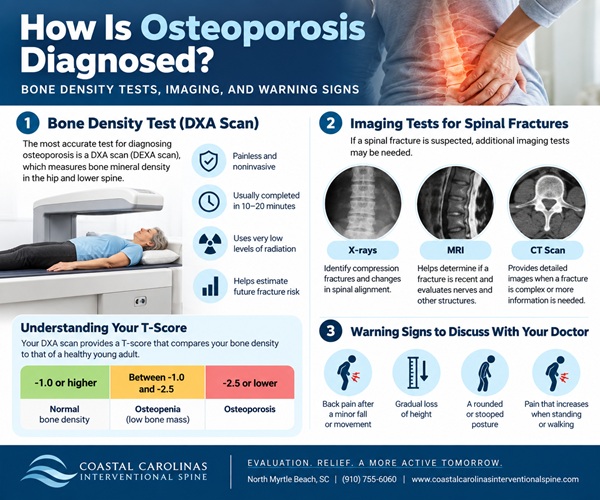
The most widely used test for diagnosing osteoporosis is a DXA scan, also called a DEXA scan. This test measures bone mineral density, usually in the hip and lower spine.
A DXA scan is:
- Painless and noninvasive
- Usually completed within 10–20 minutes
- Performed using very low levels of radiation
- Helpful for estimating future fracture risk
Unlike standard X-rays, DXA testing can identify low bone density before a fracture occurs.
However, bone density is only one part of the diagnosis. Doctors also consider age, previous fractures, medications, and other health conditions.
What Do Osteoporosis T-Scores Mean?
After a DXA scan, patients receive a T-score that compares their bone density with that of a healthy young adult.
| T-score | Meaning |
| -1.0 or higher | Normal bone density |
| Between -1.0 and -2.5 | Osteopenia (low bone mass) |
| -2.5 or lower | Osteoporosis |
Osteopenia means bone density is lower than normal but has not reached the osteoporosis threshold.
A person may still have significant fracture risk even without a T-score of -2.5. For example, a fracture following a minor fall may indicate weakened bones that require further evaluation.
Can Osteoporosis Cause Back Pain?
Osteoporosis itself usually does not cause pain. However, weakened vertebrae can develop compression fractures, which may produce sudden or persistent back pain.
Possible warning signs include:
- Back pain following a minor fall or movement
- Gradual loss of height
- A rounded or stooped posture
- Pain that increases when standing or walking
- Difficulty completing normal daily activities
These symptoms do not automatically mean a person has osteoporosis. Arthritis, muscle strain, and other spinal conditions can cause similar problems.
At Coastal Carolinas Interventional Spine, evaluating the source of back pain helps determine whether further imaging or bone health testing is appropriate.
When Are X-Rays or MRI Scans Needed?
A DXA scan measures bone density, but other imaging tests may be necessary when a spinal fracture is suspected.
X-rays can identify vertebral compression fractures and changes in spinal alignment.
MRI scans may help distinguish recent fractures from older injuries and evaluate nerves or other spinal structures.
CT scans provide detailed images when a fracture is complex or additional information is needed.
Doctors may also recommend vertebral fracture assessment (VFA), a specialized imaging technique that can detect previously unrecognized spinal fractures during certain DXA examinations.
New, significant back pain after a fall warrants prompt medical evaluation, particularly in older adults. New leg weakness, numbness around the groin, or loss of bladder or bowel control requires emergency care.
Who Should Be Screened for Osteoporosis?
Bone density screening is generally recommended for women age 65 and older. Screening for men is based on age, individual risk, and applicable clinical guidelines, with many bone health organizations recommending testing beginning at age 70.
Earlier evaluation may be appropriate for people who have:
- Experienced a fracture after a minor injury
- Taken steroid medications for extended periods
- A parent who experienced a hip fracture
- Low body weight
- Certain medical conditions that affect bone health
- Significant height loss
Doctors may also use a fracture risk calculator, such as FRAX, to estimate the likelihood of a major fracture over the next 10 years.
What Happens After Osteoporosis Is Diagnosed?
Treatment depends on bone density, fracture history, overall health, and future fracture risk.
Recommendations may include prescription medication, adequate calcium and vitamin D, appropriate weight-bearing exercise, balance training, and fall prevention.
For patients with spinal compression fractures, treatment may also address pain and mobility limitations. The goal is to reduce future fracture risk while helping patients maintain everyday activities.
Frequently Asked Questions About Osteoporosis Diagnosis
Can osteoporosis be diagnosed without a bone density scan?
Yes. Certain low-trauma fractures, especially hip or vertebral fractures, may establish an osteoporosis diagnosis even without a DXA T-score of -2.5.
Can a regular X-ray detect osteoporosis?
A regular X-ray can reveal fractures or advanced bone changes, but it is not the preferred test for measuring bone density.
Does everyone with osteoporosis need medication?
Not necessarily. Treatment decisions depend on fracture risk, bone density, previous fractures, and individual health factors.
How often should bone density testing be repeated?
The interval varies according to initial results, age, risk factors, and whether treatment has started. Your healthcare provider can recommend an appropriate schedule.
Protect Your Spine and Bone Health in North Myrtle Beach
Osteoporosis can remain unnoticed for years, but timely evaluation can identify weakened bones and help prevent future fractures.
If you have persistent back pain, unexplained height loss, or concerns about a possible compression fracture, Coastal Carolinas Interventional Spine can help evaluate your spinal symptoms and determine appropriate next steps. Call Coastal Carolinas Interventional Spine at (910) 755-6060 to schedule an evaluation.
Check our Facebook page for more educational articles
Coastal Carolinas Interventional Spine
416 Main Street
North Myrtle Beach, SC 29582
(910) 755-6060
https://www.coastalcarolinasinterventionalspine.com/
[email protected]
Coastal Carolinas Interventional Spine
10 Doctor Circle
Suite #2
Supply, NC 28462
Areas Served:
Myrtle Beach SC, North Myrtle Beach SC, Little River SC, Shallotte NC, Calabash NC, Supply NC