
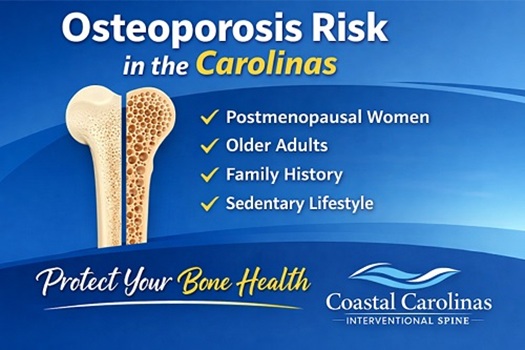
Osteoporosis risk is a growing concern for many individuals across the Carolinas, especially as the population ages and lifestyles evolve. Osteoporosis is a condition that weakens bones, making them fragile and more likely to fracture. While it can affect anyone, certain groups face a significantly higher Osteoporosis risk due to genetics, lifestyle, and underlying health conditions.
At Coastal Carolinas Interventional Spine, we focus on helping patients better understand Osteoporosis risk, recognize early warning signs, and pursue effective Osteoporosis diagnosis and treatment options to maintain an active, pain-free lifestyle.
Who Faces the Highest Osteoporosis Risk?
Not everyone has the same level of Osteoporosis risk. Several factors can increase the likelihood of developing this condition:
- Postmenopausal Women
• Women over 50 are at the highest Osteoporosis risk
• Decreased estrogen levels accelerate bone loss
• Fracture risk increases significantly after menopause - Older Adults
• Age is one of the strongest predictors of Osteoporosis risk
• Bone density naturally declines over time
• Individuals over 65 should prioritize routine Osteoporosis diagnosis screenings - Individuals with a Family History
• Genetics play a major role in Osteoporosis risk
• A family history of fractures or osteoporosis increases susceptibility - People with Low Body Weight
• Individuals with smaller frames have less bone mass to draw from
• This increases overall Osteoporosis risk over time - Sedentary Lifestyle
• Lack of physical activity weakens bones and muscles
• Weight-bearing exercise is critical in reducing Osteoporosis risk
Lifestyle Factors That Increase Osteoporosis Risk
In addition to age and genetics, everyday habits can significantly impact Osteoporosis risk:
- Poor nutrition: Low calcium and vitamin D intake weaken bone structure
- Smoking: Reduces bone density and slows healing
- Excess alcohol use: Interferes with calcium absorption
- High caffeine intake: Can contribute to bone loss when consumed excessively
Residents in coastal regions may assume outdoor lifestyles reduce Osteoporosis risk, but without proper nutrition and activity, the risk remains high.
The Importance of Early Osteoporosis Diagnosis
Early Osteoporosis diagnosis is key to preventing fractures and long-term complications. Many people are unaware they have the condition until a fracture occurs, making proactive screening essential.
Common diagnostic tools include:
- Bone density scans (DEXA scans)
- Medical history evaluations
- Risk factor assessments
If you fall into a higher Osteoporosis risk category, early testing can help detect bone loss before it becomes severe. Coastal Carolinas Interventional Spine emphasizes early Osteoporosis diagnosis to help patients take control of their bone health before symptoms worsen.
Signs You May Be at Increased Osteoporosis Risk
While osteoporosis is often called a silent disease, there are warning signs that may indicate increased Osteoporosis risk:
- Frequent fractures from minor falls
- Loss of height over time
- Stooped posture
- Chronic back pain
Recognizing these signs early can lead to faster Osteoporosis diagnosis and more effective treatment.
How to Reduce Your Osteoporosis Risk
The good news is that Osteoporosis risk can often be reduced with proactive steps:
- Maintain a Bone-Healthy Diet
• Increase calcium-rich foods like dairy, leafy greens, and fortified products
• Ensure adequate vitamin D intake - Stay Physically Active
• Engage in weight-bearing exercises such as walking, strength training, and yoga
• Improve balance to reduce fall risk - Avoid Harmful Habits
• Quit smoking
• Limit alcohol consumption - Schedule Regular Screenings
• Early Osteoporosis diagnosis can prevent serious complications
• Work with specialists to monitor bone density
At Coastal Carolinas Interventional Spine, we provide personalized care plans designed to reduce Osteoporosis risk and support long-term bone health.
Why Osteoporosis Risk Matters in the Carolinas
The Carolinas have a large population of retirees and older adults, making Osteoporosis risk a regional health priority. Combined with lifestyle factors and limited awareness, many individuals remain undiagnosed until a serious injury occurs.
By focusing on education, prevention, and early Osteoporosis diagnosis, patients can maintain mobility, independence, and quality of life.
Take Control of Your Bone Health Today
Understanding your Osteoporosis risk is the first step toward protecting your future. Whether you are experiencing symptoms or simply want to stay proactive, early Osteoporosis diagnosis and preventive care can make all the difference.
Coastal Carolinas Interventional Spine is here to help you manage Osteoporosis risk with advanced diagnostics and personalized treatment plans.
Call Coastal Carolinas Interventional Spine today at (910) 755-6060 to schedule your consultation and take the first step toward stronger, healthier bones.
Check our Facebook page for more educational articles.
Coastal Carolinas Interventional Spine
416 Main Street
North Myrtle Beach, SC 29582
(910) 755-6060
https://www.coastalcarolinasinterventionalspine.com/
[email protected]
Coastal Carolinas Interventional Spine
10 Doctor Circle
Suite #2
Supply, NC 28462
Areas Served:
Myrtle Beach SC, North Myrtle Beach SC, Little River SC, Shallotte NC, Calabash NC, Supply NC