
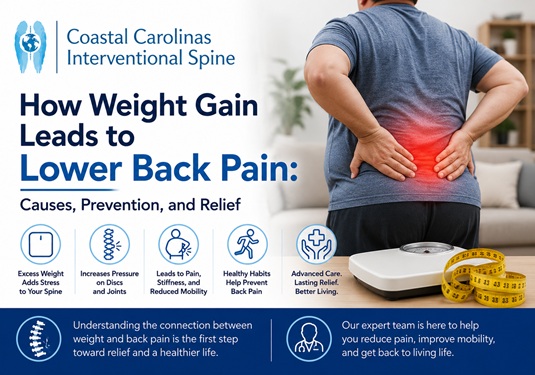
Lower back pain is one of the most common health complaints among adults. While injuries, arthritis, and spinal conditions are often discussed as causes, many people overlook the impact that weight gain can have on the spine. Excess body weight places additional stress on the muscles, joints, discs, and ligaments that support the back, often leading to chronic discomfort and reduced mobility.
At Coastal Carolinas Interventional Spine, we frequently see patients whose symptoms are directly related to weight and back pain. Understanding this connection can help you take steps to prevent worsening symptoms and find effective treatment options.
The Connection Between Weight Gain and Lower Back Pain
Your spine is designed to support your body weight and maintain proper posture. However, when you gain excess weight, especially around the abdomen, your body’s center of gravity shifts forward. As a result, the lower back must work harder to keep you upright and balanced.
Over time, this additional strain can contribute to:
- Muscle fatigue
- Joint stress
- Disc compression
- Poor posture
- Reduced spinal flexibility
These changes can significantly increase the risk of developing lower back pain and other chronic spine-related conditions.
How Excess Weight Affects the Spine
Increased Pressure on Spinal Discs
The discs between your vertebrae act as cushions that absorb shock and allow movement. Weight gain increases the pressure placed on these discs every day.
As pressure builds, discs may:
- Wear down more quickly
- Bulge outward
- Herniate
- Cause nerve compression
This can lead to persistent pain, numbness, tingling, and weakness in the back and legs.
Changes in Posture
Carrying extra weight in the abdomen often causes the pelvis to tilt forward. This posture change increases the curve of the lower spine, placing additional stress on the lumbar region.
Poor posture caused by weight gain can contribute to:
- Muscle tightness
- Spinal misalignment
- Reduced mobility
- Chronic lower back pain
Even modest increases in body weight can affect spinal alignment over time.
Increased Inflammation
Excess body fat is not simply stored energy. Fat tissue produces inflammatory chemicals that circulate throughout the body.
Chronic inflammation can:
- Increase pain sensitivity
- Worsen arthritis symptoms
- Slow healing
- Contribute to degenerative spine conditions
This inflammatory response is one reason why weight and back pain are often closely linked.
Common Conditions Associated With Weight Gain
Several spinal conditions become more common when excess weight places additional stress on the back.
Excess weight accelerates wear and tear on spinal discs, increasing the likelihood of degeneration.
Weight-related inflammation and structural changes can contribute to narrowing of the spinal canal, causing pressure on nerves.
Facet Joint Arthritis
The facet joints help stabilize the spine. Additional weight increases the load on these joints, potentially leading to arthritis and chronic pain.
Compression of spinal nerves can trigger radiating pain, numbness, or tingling that travels down one or both legs.
Warning Signs That Weight May Be Contributing to Back Pain
You may be experiencing weight-related back problems if you notice:
- Pain that worsens after standing for long periods
- Increased discomfort during walking
- Difficulty bending or twisting
- Reduced mobility
- Pain that improves with weight loss
- Aching in the lower back after daily activities
If these symptoms persist, a spine specialist can help determine the underlying cause.
Preventing Weight-Related Back Pain
The good news is that many cases of weight-related back pain can be improved through lifestyle changes and early treatment.
Maintain a Healthy Weight
Losing even a small amount of excess weight can reduce stress on the spine and improve mobility.
Stay Active
Low-impact exercises help strengthen muscles that support the back without placing excessive strain on the joints.
Helpful activities include:
- Walking
- Swimming
- Water aerobics
- Cycling
- Stretching programs
Strengthen Core Muscles
Strong abdominal and back muscles provide support for the spine and help improve posture.
Practice Good Posture
Pay attention to posture while sitting, standing, and lifting objects. Proper body mechanics reduce stress on the lower back.
Treatment Options for Weight-Related Lower Back Pain
If lifestyle changes alone are not enough, professional treatment may help relieve symptoms and improve function.
At Coastal Carolinas Interventional Spine, treatment plans may include:
- Comprehensive spine evaluations
- Diagnostic imaging
- Physical therapy recommendations
- Anti-inflammatory treatments
- Epidural steroid injections
- Facet joint injections
- Personalized pain management strategies
These minimally invasive treatments can help reduce pain and improve quality of life without surgery.
When to See a Pain Doctor Near Me
Many patients search online for a “pain doctor near me” after struggling with back pain for months or even years. While occasional soreness may improve with rest, persistent symptoms should be evaluated by a specialist.
You should seek medical attention if:
- Pain lasts longer than a few weeks
- Symptoms interfere with daily activities
- You experience numbness or weakness
- Walking becomes difficult
- Pain continues despite weight loss efforts
Early intervention can prevent symptoms from becoming more severe and help preserve spinal health.
Find Back Pain Relief
Weight gain can significantly impact spinal health by increasing pressure on the discs, joints, muscles, and nerves of the lower back. Fortunately, many patients experience meaningful improvement through weight management, exercise, posture correction, and advanced pain management treatments.
At Coastal Carolinas Interventional Spine, our experienced team specializes in diagnosing and treating chronic lower back pain using personalized, minimally invasive approaches designed to help you regain comfort and mobility.
Call Coastal Carolinas Interventional Spine today at (910) 755-6060 to schedule a consultation and learn more about your treatment options.
Check our Facebook page for more educational articles
Coastal Carolinas Interventional Spine
416 Main Street
North Myrtle Beach, SC 29582
(910) 755-6060
https://www.coastalcarolinasinterventionalspine.com/
[email protected]
Coastal Carolinas Interventional Spine
10 Doctor Circle
Suite #2
Supply, NC 28462
Areas Served:
Myrtle Beach SC, North Myrtle Beach SC, Little River SC, Shallotte NC, Calabash NC, Supply NC