
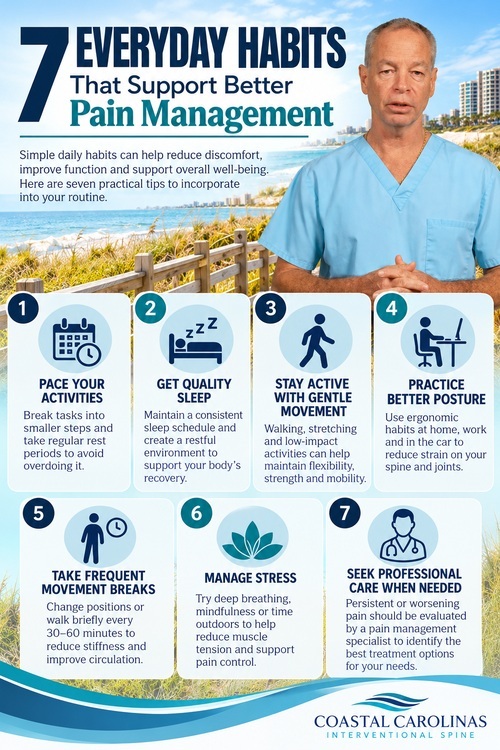
Managing chronic pain often starts with small, consistent lifestyle changes. Simple health tips for pain management, such as staying active, improving sleep, practicing good posture, and pacing daily activities, may help reduce discomfort and support mobility. For residents of North Myrtle Beach and the Grand Strand, these everyday habits can complement personalized medical care.
-
How Can Pacing Daily Activities Help Manage Pain?
Pacing means balancing activity with regular rest periods to avoid overdoing it. Many people with chronic back or neck pain experience increased discomfort after prolonged physical activity.
Instead of completing every household chore at once, divide tasks into smaller steps. Take short breaks before discomfort becomes overwhelming.
For example, North Myrtle Beach residents who enjoy gardening, golfing, or walking along the beach may benefit from shorter activity sessions with planned recovery periods.
The goal is to maintain participation in daily life without repeatedly pushing beyond comfortable limits.
-
Why Is Quality Sleep Important for Pain Management?
Poor sleep can increase pain sensitivity, while ongoing discomfort can make restful sleep difficult.
Developing healthy sleep habits may help support the body’s recovery processes.
Consider these simple adjustments:
- Maintain consistent bedtime and wake-up schedules.
- Keep your bedroom cool, dark, and quiet.
- Limit caffeine late in the day.
- Avoid prolonged screen use before bedtime.
- Use pillows that support comfortable spinal alignment.
If pain frequently interrupts sleep, discuss the problem with a healthcare professional.
-
What Types of Movement Can Support Chronic Pain Relief?
Gentle, regular movement helps maintain flexibility, muscle strength, and joint function.
Depending on your condition, appropriate activities may include walking, swimming, stretching, or guided physical therapy exercises.
The Grand Strand offers opportunities for low-impact activity, including walking on level pathways and enjoying controlled exercise in indoor pools.
However, not every exercise is suitable for every spinal condition. Begin gradually and consult your healthcare provider before starting unfamiliar activities, particularly if movement causes worsening pain, weakness, or numbness.
-
How Does Better Posture Reduce Everyday Strain?
Poor posture can place additional stress on muscles, joints, and spinal structures.
Whether working at a desk, driving along Highway 17, or relaxing at home, maintaining comfortable spinal alignment may reduce unnecessary strain.
Helpful ergonomic habits include:
- Positioning computer screens near eye level.
- Keeping feet supported while sitting.
- Using chairs with adequate lower-back support.
- Avoiding prolonged periods in one position.
- Holding frequently used objects within easy reach.
Remember that changing positions regularly is often more helpful than trying to maintain one perfect posture all day.
-
Why Should You Take Frequent Movement Breaks?
Remaining seated or standing for extended periods can contribute to stiffness and muscle fatigue.
Try changing positions or walking briefly every 30–60 minutes, depending on your comfort and medical needs.
Small movements throughout the day may improve circulation and help maintain mobility.
For people managing persistent back pain, these breaks can be especially useful during office work, travel, or other sedentary activities.
-
How Can Stress Management Support Pain Control?
Stress can increase muscle tension and influence how the nervous system processes discomfort.
Simple relaxation practices may help manage the emotional and physical effects of chronic pain.
Consider deep breathing, mindfulness, gentle stretching, or spending quiet time outdoors.
Enjoying peaceful surroundings along the North Myrtle Beach coastline can provide opportunities for relaxation without requiring strenuous activity.
Stress management does not replace medical treatment, but it can complement a broader care plan.
-
When Should You Seek Professional Pain Management Care?
Lifestyle adjustments may help some symptoms, but persistent or worsening pain deserves medical evaluation.
At Coastal Carolinas Interventional Spine, patients can receive individualized assessments to identify possible sources of back, neck, and nerve-related pain.
Depending on the diagnosis, treatment discussions may include conservative approaches, physical therapy, or appropriate interventional procedures.
Seek urgent medical attention for serious warning signs, including new loss of bladder or bowel control, numbness around the groin, or sudden significant leg weakness.
Frequently Asked Questions About Pain Management
Can everyday habits help with chronic back pain?
Yes. Appropriate movement, sleep routines, pacing, and ergonomic adjustments may help improve daily comfort and function.
How much exercise is recommended for someone with chronic pain?
Activity levels depend on the underlying condition, physical abilities, and symptoms. A healthcare professional can recommend a suitable exercise plan.
When should I visit a pain management doctor?
Consider an evaluation when pain persists, worsens, disrupts sleep, or interferes with work and everyday activities.
Take the Next Step Toward Personalized Pain Management
Following practical health tips for pain management can support daily well-being, but lasting concerns may require professional guidance.
Coastal Carolinas Interventional Spine serves patients in North Myrtle Beach and throughout the Grand Strand. Schedule a personalized consultation to discuss your symptoms, explore appropriate treatment options, and develop a care plan based on your individual needs.
Check our Facebook page for more educational articles.
Coastal Carolinas Interventional Spine
416 Main Street
North Myrtle Beach, SC 29582
(910) 755-6060
https://www.coastalcarolinasinterventionalspine.com/
[email protected]
Coastal Carolinas Interventional Spine
10 Doctor Circle
Suite #2
Supply, NC 28462
Areas Served:
Myrtle Beach SC, North Myrtle Beach SC, Little River SC, Shallotte NC, Calabash NC, Supply NC