
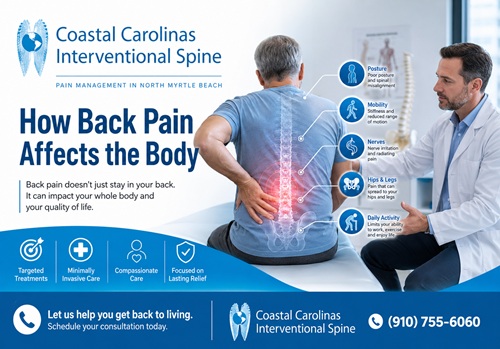
Back pain does not always remain limited to one area of the spine. It can change how you walk, interrupt your sleep, reduce your energy, and make everyday movement feel more difficult.
When pain begins affecting several parts of daily life, it may be a sign that the underlying problem needs closer attention. At Coastal Carolinas Interventional Spine, we help patients identify the source of their symptoms and explore personalized options for restoring comfort and function.
Can Lower Back Pain Affect Your Ability to Walk?
Yes, lower back pain can make walking painful, tiring, or unsteady. Some people experience discomfort as soon as they stand, while others notice pain only after walking for several minutes.
Back pain while walking may feel like:
- A dull ache across the lower back
- Sharp pain during certain steps
- Heaviness or weakness in the legs
- Burning, numbness, or tingling
- Pain that spreads into the hip, buttock, or leg
- A need to lean forward or stop frequently
- Difficulty standing upright
The symptoms may develop because walking requires the spine, hips, abdominal muscles, and legs to work together. When inflammation, nerve irritation, muscle weakness, or a spinal condition affects this system, each step may place additional stress on sensitive areas.
Why Walking May Become More Difficult
Several conditions can contribute to pain or weakness during walking. These may include arthritis, degenerative disc changes, spinal stenosis, herniated discs, muscle strain, or irritation of a spinal nerve.
For example, spinal stenosis can reduce the space available for nerves in the lower spine. Some patients with this condition feel increased leg pain, numbness, weakness, or heaviness when standing or walking.
Pain can also change a person’s walking pattern. You may shorten your steps, lean to one side, move more slowly, or avoid placing weight on a painful leg.
Although these adjustments may temporarily reduce discomfort, they can place extra stress on the hips, knees, muscles, and other areas of the back. Over time, this compensation may contribute to additional stiffness and fatigue.
Should You Continue Walking When Your Back Hurts?
Complete bed rest is usually not recommended for routine back pain because extended inactivity can contribute to stiffness, weakness, and greater difficulty returning to normal activities. In many cases, gentle movement within a comfortable range is encouraged, although the correct activity level depends on the cause and severity of the pain.
Walking is a low-impact activity that may help some patients remain active. However, you should not force yourself through severe pain, increasing weakness, or symptoms that spread into your legs.
A medical evaluation is especially important when back pain while walking repeatedly forces you to stop, limits how far you can go, or makes you feel unstable. A physician can determine whether walking is appropriate and recommend a safer, more individualized activity plan.
How Back Pain Disrupts Sleep
Back pain and sleep problems often occur together. Pain can make it difficult to find a comfortable position, fall asleep, remain asleep, or turn over in bed.
Some people wake several times each night because their back begins to ache. Others sleep lightly because they are worried that changing positions will cause a sudden increase in pain.
Poor sleep can then affect how the body responds to discomfort the following day. Fatigue may make pain feel harder to manage and may reduce your ability to stay active, concentrate, work, or complete household tasks.
This can create a frustrating cycle:
- Back pain makes it difficult to sleep.
- Poor sleep leads to daytime fatigue.
- Fatigue reduces activity and physical endurance.
- Lower activity levels may contribute to stiffness and weakness.
- Increased stiffness may make the next night uncomfortable again.
Breaking this cycle often requires addressing the back condition rather than relying only on temporary sleep adjustments.
Finding a More Comfortable Sleeping Position
The best sleeping position varies from person to person. However, keeping the spine supported and avoiding unnecessary twisting may reduce pressure on irritated muscles and joints.
Side sleepers may feel more comfortable with a pillow between the knees. This can help keep the hips, pelvis, and spine in a more neutral position.
People who sleep on their backs may benefit from placing a pillow beneath the knees. This position may reduce tension in the lower back and help maintain its natural curve.
Sleeping on the stomach can place extra strain on the lower back for some patients. When changing positions does not help, or pain consistently wakes you at night, it is important to discuss the problem with a healthcare provider.
How Poor Sleep Affects Daily Energy
The effects of back pain and sleep disruption often continue after you get out of bed. Even a routine morning may feel overwhelming when you have not received enough restorative sleep.
You may notice:
- Difficulty concentrating
- Slower reaction times
- Irritability or changes in mood
- Reduced motivation
- Muscle fatigue
- Less patience with daily tasks
- A greater need to rest
- Difficulty participating in work or family activities
Fatigue can also affect posture and body mechanics. When you are tired, you may slump in a chair, move less carefully, or rely on poor lifting techniques.
Therefore, treating persistent back pain may help improve more than physical comfort. Better symptom control may also support healthier sleep, improved energy, and a more manageable daily routine.
The Connection Between Back Pain and Limited Mobility

Mobility is your ability to move safely and comfortably through everyday life. It includes walking, bending, standing, climbing stairs, getting into a car, rising from a chair, and completing personal care tasks.
Back pain and mobility problems often develop gradually. At first, you may stop taking long walks or avoid lifting heavy objects. Later, you may find yourself turning down social activities, asking for help with household tasks, or spending more time sitting.
Patients sometimes limit movement because they fear making the condition worse. While certain activities may need to be modified, avoiding nearly all movement can allow muscles to weaken and joints to become stiffer.
Research-based patient guidance generally encourages people with recurring or persistent low back pain to remain as active as their condition safely allows. Appropriate exercises may help strengthen the muscles that support the spine and improve function, but activities should be selected according to the individual’s diagnosis and abilities.
Signs That Limited Mobility Needs Medical Attention
Occasional stiffness after overexertion may improve with conservative care. However, ongoing changes in walking or mobility should not be ignored.
Schedule an evaluation when back pain:
- Continues to interfere with walking
- Makes you feel weak or unsteady
- Causes recurring numbness or tingling
- Spreads into the hips, buttocks, or legs
- Prevents you from sleeping
- Limits work, exercise, or household activities
- Continues to worsen rather than improve
- Returns frequently after temporary back pain relief
Seek urgent medical care for back pain accompanied by a sudden loss of bladder or bowel control, numbness around the groin or inner thighs, rapidly worsening leg weakness, a serious fall or injury, fever, or unexplained weight loss.
Restoring Movement Starts With the Right Diagnosis
Back pain can result from many different conditions, so the treatment that helps one patient may not be right for another. An accurate diagnosis helps determine whether symptoms arise from a joint, disc, nerve, muscle, or another structure.
A physician may begin with a medical history, physical examination, and a review of how the pain affects walking, sleep, and daily activity. When appropriate, diagnostic imaging or other tests may help clarify the source.
Treatment may include activity modifications, therapeutic exercise, medication management, targeted injections, or other non-surgical interventional procedures. The goal is not simply to cover up discomfort but to improve function and help you participate more fully in daily life.
Take the Next Step Toward Better Mobility
You should not have to organize your entire day around back pain in North Myrtle Beach. When symptoms affect your ability to walk, sleep, or move comfortably, a professional evaluation can help you understand why.
Coastal Carolinas Interventional Spine provides patient-focused care designed to identify the source of pain and develop a treatment plan based on your individual needs.
Call (910) 755-6060 to schedule an appointment and learn about options that may help you move, rest, and live with greater comfort.
Take the next step toward lasting back pain relief. Contact Coastal Carolinas Interventional Spine to schedule a consultation and learn about treatment options tailored to your condition, comfort, and mobility goals.
This article is for educational purposes and does not replace personalized medical advice, diagnosis, or emergency care.
Check our Facebook page for more educational articles
Coastal Carolinas Interventional Spine
416 Main Street
North Myrtle Beach, SC 29582
(910) 755-6060
https://www.coastalcarolinasinterventionalspine.com/
[email protected]
Coastal Carolinas Interventional Spine
10 Doctor Circle
Suite #2
Supply, NC 28462
Areas Served:
Myrtle Beach SC, North Myrtle Beach SC, Little River SC, Shallotte NC, Calabash NC, Supply NC