
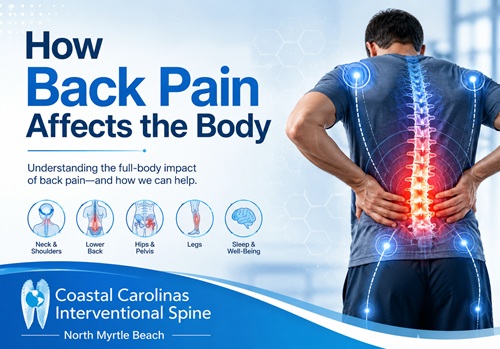
Back pain in North Myrtle Beach rarely affects only one small area of the body. When discomfort continues for weeks or months, it can change how you walk, sleep, move, work, and complete everyday activities.
The spine also protects nerves that carry signals between the brain and the rest of the body. Therefore, certain spinal conditions may cause symptoms in the hips, pelvis, buttocks, or legs rather than only in the back.
At Coastal Carolinas Interventional Spine, we help patients understand where their pain begins and why it may be affecting other parts of the body. Identifying the source is an important step toward developing a treatment plan that supports lasting back pain relief and better function.
How Chronic Back Pain Affects Your Entire Body
The effects of chronic back pain can extend far beyond soreness or stiffness. Persistent pain may gradually affect your muscles, joints, energy, sleep, emotional health, and ability to stay active.
Changes in Movement and Posture
When your back hurts, your body naturally tries to protect the painful area. You may lean to one side, take shorter steps, avoid bending, or place additional pressure on the opposite side of your body.
These changes may provide temporary comfort. However, repeatedly moving this way can place added strain on the hips, knees, pelvis, and surrounding muscles.
Over time, compensating for back pain may contribute to:
- Muscle tightness or weakness
- Reduced flexibility
- An uneven walking pattern
- Poor balance
- Hip or knee discomfort
- Difficulty standing upright
- Reduced physical endurance
Because every part of the musculoskeletal system works together, pain in one area can affect movement throughout the body.
Muscle Weakness and Reduced Activity
Many people become less active when movement causes pain. Although resting briefly after an injury may be appropriate, long periods of inactivity can weaken the muscles that support the spine.
Weak abdominal, back, hip, and leg muscles may make ordinary activities feel harder. Getting out of a chair, climbing stairs, carrying groceries, or walking through a store may require greater effort.
Reduced activity can also create a difficult cycle. Pain leads to less movement, less movement contributes to weakness and stiffness, and that weakness may make movement even more uncomfortable.
Sleep Problems and Fatigue
Finding a comfortable sleeping position can be difficult when your back aches. Pain may prevent you from falling asleep, wake you during the night, or leave you stiff and uncomfortable in the morning.
Poor sleep can then increase fatigue and make pain feel harder to manage. Chronic pain is commonly associated with insomnia, low energy, irritability, and mood changes.
Without enough restorative sleep, patients may also have difficulty concentrating, working, exercising, or keeping up with family responsibilities.
Emotional and Social Effects
Living with ongoing pain can feel frustrating and isolating. Patients may stop participating in hobbies, social events, travel, or family activities because they are concerned that movement will worsen their symptoms.
Chronic back pain may also contribute to stress, irritability, anxiety, or feelings of discouragement. These reactions do not mean that the pain is imagined. Pain is a personal sensory and emotional experience, and each patient experiences it differently.
Addressing chronic back pain may involve improving both physical comfort and the patient’s ability to return to meaningful activities.
Can Back Pain Cause Leg Weakness, Numbness, or Tingling?

Back pain and leg numbness can occur together when a nerve in the lower spine becomes irritated, inflamed, or compressed. Depending on the affected nerve, symptoms may travel through the buttock, thigh, calf, or foot.
The spinal nerves control sensation and help activate the muscles in the legs. When these nerves cannot communicate normally, patients may experience:
- Pins-and-needles sensations
- Burning or electric pain
- Numbness in part of the leg or foot
- Heaviness in the legs
- Muscle weakness
- Difficulty lifting the front of the foot
- Problems standing or walking
- Pain that travels below the knee
A herniated disc, bone spur, spinal stenosis, or another spinal condition may place pressure on a nerve root. Sciatica, for example, can cause pain and numbness along one leg when nerve roots connected to the sciatic nerve become compressed.
Leg Weakness Should Not Be Ignored
Pain can sometimes make a leg feel weak because the person is afraid to place weight on it. True muscle weakness is different and may indicate that a nerve is not functioning properly.
You might notice that your knee gives way, your foot drags, or you have trouble climbing stairs. You may also find it difficult to stand from a seated position or walk your usual distance.
New or worsening weakness, numbness, or tingling should be evaluated by a medical professional. These symptoms can help a doctor determine whether nerves are involved and whether additional testing is needed.
When Leg Symptoms Require Immediate Care
Seek urgent medical attention when back pain occurs with:
- Sudden or rapidly worsening leg weakness
- Loss of bladder or bowel control
- Numbness around the groin, buttocks, or inner thighs
- Severe difficulty walking or maintaining balance
- Symptoms in both legs that are quickly progressing
- Back pain following a serious accident or fall
These symptoms may indicate significant nerve or spinal cord compression and should not be treated as routine back pain. Mayo Clinic also recommends prompt medical evaluation when back pain causes weakness, numbness, or tingling in one or both legs.
How Back Pain Can Affect the Hips and Pelvis
Back and hip pain often occur together because the lower spine, pelvis, and hips share muscles, joints, ligaments, and nerve pathways. A problem in one area can change how the surrounding structures move and carry weight.
For example, someone with lower back pain may shift more weight onto one hip. This adjustment can strain the muscles surrounding the pelvis and make the hip feel sore, tight, or unstable.
Referred Pain From the Spine
The location where you feel pain is not always where the problem begins. A condition affecting the lower spine may create referred pain in the buttocks, outer hip, groin, or upper thigh.
Referred pain may feel like:
- A deep ache in the buttock
- Pressure around the hip
- Pain near the back of the pelvis
- Discomfort that spreads into the thigh
- Pain that changes with sitting, standing, or bending
When a nerve is involved, the pain may feel sharp, burning, or electric. It may also occur with tingling or numbness.
Changes in the Pelvis and Walking Pattern
The pelvis provides a stable connection between the spine and legs. When back pain changes posture or walking mechanics, the muscles around the pelvis may work harder to maintain balance.
This can lead to tightness in some muscles and weakness in others. Patients may begin to limp, rotate the pelvis differently, or avoid fully extending one hip while walking.
Eventually, these changes can make it difficult to determine whether the pain is coming from the spine, hip joint, sacroiliac joint, or surrounding soft tissues.
Is the Pain Coming From the Back or the Hip?
Back and hip conditions can produce similar symptoms. However, certain patterns may provide useful clues.
Pain that begins in the lower back and travels through the buttock or leg may suggest spinal nerve irritation. Pain located mainly in the groin or front of the thigh may be more closely associated with the hip joint.
These patterns are not reliable enough for self-diagnosis. A thorough medical evaluation may include a discussion of your symptoms, physical examination, strength and reflex testing, and diagnostic imaging when appropriate.
Finding the Source of Your Symptoms
Back pain can affect much more than your spine. It may disrupt sleep, weaken muscles, alter your walking pattern, and cause symptoms throughout the hips, pelvis, or legs.
Fortunately, understanding the source of the problem can help guide appropriate care. Treatment should be based on the condition causing the pain rather than only the location where the patient feels it.
Coastal Carolinas Interventional Spine provides personalized evaluations and non-surgical treatment options for patients living with persistent back pain and related symptoms. Our goal is to help reduce pain, restore function, and make everyday movement more comfortable.
This article is for educational purposes and does not replace personalized medical advice, diagnosis, or emergency care.
If back pain is interfering with your mobility, sleep, work, or quality of life, call Coastal Carolinas Interventional Spine at (910) 755-6060 to schedule an evaluation.
Check our Facebook page for more educational articles
Coastal Carolinas Interventional Spine
416 Main Street
North Myrtle Beach, SC 29582
(910) 755-6060
https://www.coastalcarolinasinterventionalspine.com/
[email protected]
Coastal Carolinas Interventional Spine
10 Doctor Circle
Suite #2
Supply, NC 28462
Areas Served:
Myrtle Beach SC, North Myrtle Beach SC, Little River SC, Shallotte NC, Calabash NC, Supply NC