
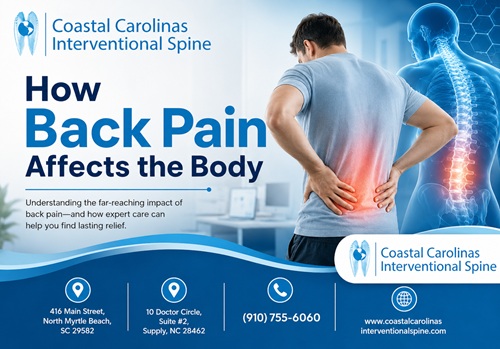
Back pain does not always remain limited to one area of the spine. Over time, ongoing discomfort can influence emotional well-being, muscle function, posture, balance, and the way a person completes everyday activities.
Most changes develop gradually as the body attempts to protect a painful area. However, certain symptoms involving bladder or bowel control may indicate a serious problem that requires immediate medical attention.
We continue out review of How Back Pain Affects the body. In Part 1 we covered chronic pain. Part 2 we talked about walking, sleep and mobility. On this final post we will discuss how pain affects your mental well-being.
How Chronic Pain Can Affect Mood and Mental Well-Being
The relationship between chronic pain and mental health can become a difficult cycle. Persistent pain may cause frustration, worry, sadness, irritability, or a sense of losing control over daily life.
The National Institute of Neurological Disorders and Stroke explains that people living with chronic pain commonly experience emotions such as anger, anxiety, hopelessness, depression, and grief. These feelings do not mean the pain is imaginary; they reflect the physical and emotional strain of managing a condition that continues for weeks, months, or years.
Back pain may affect emotional health by interfering with:
- Restful sleep
- Work responsibilities
- Exercise and recreation
- Household activities
- Social events
- Family time
- Personal independence
A person may begin avoiding activities because they fear increasing their pain. Although rest may feel helpful at first, extended inactivity and isolation can sometimes contribute to stiffness, reduced confidence, low mood, and greater sensitivity to discomfort.
Pain can also make it harder to concentrate. When the brain constantly monitors uncomfortable sensations, routine decisions and conversations may require more energy than usual.
Patients should feel comfortable telling their medical provider when pain affects their mood, relationships, motivation, or sleep. Treating the physical source of pain while also addressing its emotional effects may support better overall health and quality of life.
Can Back Pain Cause Muscle Imbalances?
A muscle imbalance from back pain can develop when the body repeatedly shifts stress away from an uncomfortable area. One group of muscles may become tight and overworked, while another group becomes less active or weaker.
For example, someone with pain on the right side of the lower back may lean toward the left when standing. Another patient may shorten their stride, avoid bending at the hips, or place additional weight on one leg.
These adjustments are often automatic. The body is trying to protect itself, but the new movement pattern may place added stress on the hips, pelvis, knees, or opposite side of the back.
Possible signs of an imbalance include:
- One shoulder or hip appearing higher than the other
- Uneven wear on the bottoms of shoes
- Tightness on one side of the body
- Weakness during certain movements
- Difficulty standing evenly on both legs
- Pain that shifts into the hips, buttocks, or thighs
- Fatigue after walking or standing
Not every small difference in posture represents a medical problem. Natural variations are common, so a complete evaluation is more useful than judging posture from appearance alone.
A spine specialist can examine strength, flexibility, reflexes, walking patterns, and areas of tenderness. When appropriate, treatment may include targeted exercises, physical therapy, medication management, image-guided procedures, or another approach based on the underlying diagnosis.
Patients should avoid beginning aggressive strengthening or stretching exercises without guidance when pain is severe, unexplained, or accompanied by weakness or numbness.
How Back Pain Changes the Way You Sit, Stand, and Move
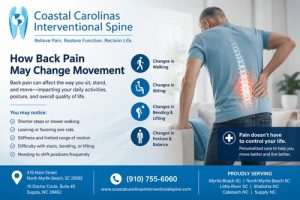
The connection between back pain and movement often becomes noticeable during ordinary activities. Sitting in a chair, standing at a counter, getting out of bed, or stepping into a car may suddenly require careful planning.
Some patients sit with their weight shifted to one side. Others brace their hands on their thighs before standing or avoid rotating their torso when turning.
Back pain may change movement in several ways:
- Taking shorter steps
- Walking more slowly
- Leaning forward or to one side
- Keeping the back unusually stiff
- Avoiding stairs
- Using the arms to rise from a chair
- Limiting bending, lifting, or reaching
- Frequently changing positions
These protective behaviors may reduce discomfort temporarily. However, maintaining a guarded position for too long may contribute to muscle tension, stiffness, reduced range of motion, and decreased endurance.
Staying completely still is not always the best response to uncomplicated back pain. Research-based clinical guidance supports appropriately selected exercise and movement-control training for many people with chronic lower back pain.
The right amount and type of movement will depend on the patient’s diagnosis. A person with a muscle strain may need a different plan than someone with spinal stenosis, arthritis, a herniated disc, or nerve compression.
A medical evaluation can help determine which movements are safe and which activities should be temporarily modified. The goal is not simply to force the body into a “perfect” posture, but to restore comfortable, confident, and efficient movement.
Can Back Pain Affect Bladder or Bowel Control?
Most cases of back pain do not affect bladder or bowel function. However, new changes in these functions can be among the most important back pain warning signs.
A rare but serious condition called cauda equina syndrome can occur when nerve roots at the bottom of the spinal canal become severely compressed. These nerves help control sensation and function in the legs, bladder, bowel, and pelvic region.
Seek Emergency Medical Care Immediately for These Symptoms
Go to the nearest emergency department or call 911 when back pain occurs with:
- New difficulty starting or controlling urination
- An inability to feel when the bladder is full
- New loss of bladder control
- New loss of bowel control
- Numbness around the buttocks, inner thighs, genitals, or groin
- Rapidly worsening weakness in one or both legs
- Severe back pain with sudden neurological changes
Numbness in the areas that would touch a bicycle seat is sometimes called “saddle numbness” or “saddle anesthesia.” When it occurs with bladder, bowel, leg, or sexual-function changes, it requires urgent evaluation.
Cauda equina syndrome is considered a medical emergency because prompt back pain treatment may reduce the risk of permanent nerve damage, paralysis, or lasting bladder and bowel problems.
Do not wait for a routine office appointment when these symptoms appear. Even when the cause turns out to be something less serious, emergency evaluation is the safest response.
When Should You Schedule a Back Pain Evaluation?
Back pain deserves medical attention when it continues, repeatedly returns, limits movement, or begins affecting other areas of life. An evaluation may be especially helpful when pain interferes with sleep, work, walking, exercise, or emotional well-being.
You should also speak with a medical provider if you notice:
- Persistent numbness or tingling
- Increasing leg weakness
- Difficulty maintaining balance
- Pain that travels into an arm or leg
- Significant changes in posture or walking
- Symptoms that continue despite rest and basic care
- Pain following a fall, collision, or other injury
A thorough evaluation may include a discussion of symptoms, a physical examination, neurological testing, and imaging when medically appropriate. Identifying the source of pain allows the provider to recommend treatment based on the patient’s condition rather than relying on a one-size-fits-all approach.
Personalized Care for Back Pain
Back pain can affect far more than the spine. It may change how you feel, how your muscles work, and how confidently you move through the day.
At Coastal Carolinas Interventional Spine, patients receive individualized evaluations and treatment recommendations designed to address the source of pain, improve function, and support a better quality of life.
This article provides general educational information and is not a substitute for an individual medical evaluation. Call 911 or seek emergency care immediately for new bladder or bowel dysfunction, saddle numbness, or rapidly worsening leg weakness.
To schedule an appointment, call (910) 755-6060 and speak with the Coastal Carolinas Interventional Spine team.
This article is for educational purposes and does not replace personalized medical advice, diagnosis, or emergency care.
Check our Facebook page for more educational articles
Coastal Carolinas Interventional Spine
416 Main Street
North Myrtle Beach, SC 29582
(910) 755-6060
https://www.coastalcarolinasinterventionalspine.com/
[email protected]
Coastal Carolinas Interventional Spine
10 Doctor Circle
Suite #2
Supply, NC 28462
Areas Served:
Myrtle Beach SC, North Myrtle Beach SC, Little River SC, Shallotte NC, Calabash NC, Supply NC