
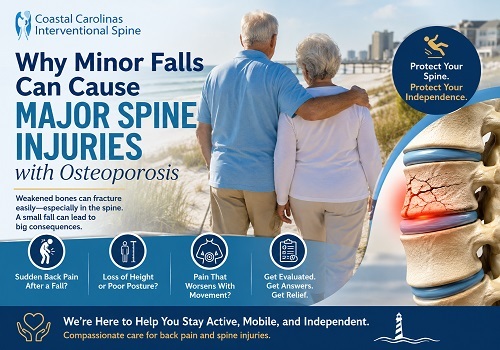
For retirees in North Myrtle Beach, staying active may include walking the beach, golfing, gardening, traveling, enjoying community activities, or simply keeping up with everyday errands. However, as bones become weaker with age, even a minor fall can lead to a serious spinal injury. For people with osteoporosis, a simple slip at home, missed step, or loss of balance may be enough to cause a vertebral fracture.
At Coastal Carolinas Interventional Spine, older adults are evaluated for back pain, reduced mobility, and spinal problems that may develop after a fall. Recognizing the connection between osteoporosis and spine injuries can help retirees seek care sooner and protect the independence they value.
Why Osteoporosis Is an Important Concern for Retirees
Bone density naturally changes with age. In some adults, bones become significantly weaker and more fragile, increasing the risk of fractures.
Osteoporosis is often called a silent disease because bone loss can progress without obvious symptoms. Many people do not realize their bones have weakened until they experience a fracture.
For retirees, this can become especially important because a fracture may affect much more than comfort. Pain and limited mobility can interfere with driving, shopping, exercising, traveling, household tasks, and participating in favorite activities.
The vertebrae are particularly vulnerable because they carry the body’s weight throughout the day. When these bones weaken, forces that once seemed harmless may become enough to cause injury.
How Everyday Falls Can Lead to Spine Injuries
A serious spinal fracture does not always require a major accident.
An older adult may experience a vertebral compression fracture after slipping in the bathroom, tripping over a rug, stepping awkwardly off a curb, or losing balance while walking outside.
In North Myrtle Beach, retirees may also encounter uneven sidewalks, wet pool areas, sandy surfaces, stairs, docks, and other places where footing can become less predictable.
When a person falls, force travels through the body. Healthy vertebrae can often absorb that pressure. Weakened bones may compress or partially collapse instead.
Common situations that may lead to injury include:
- Slipping on a wet kitchen or bathroom floor
- Missing the last step on a staircase
- Tripping over a pet, rug, or electrical cord
- Falling while gardening
- Losing balance while stepping off a curb
- Slipping near a pool or outdoor patio
- Falling while getting in or out of a vehicle
In advanced cases, a weakened vertebra can sometimes fracture during bending, twisting, lifting, or other routine movements.
What Is a Vertebral Compression Fracture?
A vertebral compression fracture occurs when one of the spinal bones loses height because it has weakened and collapsed.
Some fractures cause sudden, sharp back pain. Others create discomfort that develops gradually and may initially feel like arthritis, muscle soreness, or normal age-related stiffness.
That is one reason fractures can sometimes go unnoticed.
A compression fracture may affect posture and spinal alignment. If several vertebrae become compressed over time, a person may develop a more rounded upper back or notice that they are becoming shorter.
For a retiree who wants to remain active and independent, these changes can affect balance, walking, strength, and confidence during everyday activities.
Warning Signs After a Minor Fall
Back pain after a fall deserves attention, especially in an older adult with known or suspected bone loss.
Possible signs of a vertebral fracture include:
- Sudden pain in the middle or lower back
- Pain that becomes worse when standing or walking
- Pain when bending, twisting, or changing positions
- Tenderness along the spine
- Difficulty standing fully upright
- Reduced ability to walk comfortably
- New posture changes
- Gradual loss of height
Some people feel better while lying down and experience increased discomfort when upright.
It can be tempting to assume the problem is simply a strained muscle. However, ongoing pain after a fall should not automatically be considered a normal part of aging.
Why Retirees Should Have Persistent Back Pain Evaluated

Remaining mobile is a major part of maintaining independence during retirement.
When back pain limits walking, household activities, exercise, or social outings, the effects can quickly extend beyond the spine. Reduced movement may contribute to weakness, poor balance, and a greater risk of another fall.
At Coastal Carolinas Interventional Spine, an evaluation can help determine whether symptoms may be related to a fracture or another spinal condition.
A physician may review how the injury occurred, where the pain is located, whether osteoporosis has been diagnosed, and whether there have been previous fractures.
The examination may also assess walking, movement, strength, sensation, and neurological symptoms.
Depending on the findings, imaging may be recommended to look more closely at the spinal bones.
A First Fracture May Be a Warning Sign
One vertebral fracture may indicate that the bones are vulnerable to future injuries.
That makes early evaluation particularly important for retirees who want to remain active.
A treatment plan may address both the current spinal problem and the factors that may increase the risk of another fracture.
Depending on the individual, recommendations could include activity changes, physical therapy, pain management, osteoporosis treatment, fall-prevention strategies, or other treatments.
The goal is not simply to reduce pain. It is also to help preserve mobility, function, and quality of life.
Protecting Independence Starts With Fall Prevention
Fall prevention is especially important when bones are fragile.
Many falls happen at home, so retirees can reduce risk by looking closely at their surroundings.
Loose rugs, cluttered walkways, poorly lit hallways, slippery bathroom floors, and missing handrails can all increase the chance of falling.
Helpful safety measures may include:
- Installing grab bars in bathrooms
- Adding non-slip mats
- Improving lighting around stairs
- Keeping walkways clear
- Wearing supportive footwear
- Using handrails consistently
- Having vision checked regularly
- Discussing balance problems with a healthcare provider
Strength and balance exercises may also be helpful when medically appropriate.
For retirees who enjoy walking, golfing, boating, gardening, or other activities around North Myrtle Beach, maintaining good balance can make it easier to stay active with confidence.
Bone Health Matters During Retirement
Preventing fractures also means paying attention to bone strength.
A healthcare provider can determine whether bone-density testing is appropriate and whether medications or other osteoporosis treatments should be considered.
Nutrition can also play a role. Adequate calcium, vitamin D, and overall nutrition support bone health, although individual needs should be discussed with a healthcare professional.
Patients should also review medications that may contribute to dizziness or balance problems.
Managing these factors can help reduce both fracture risk and the chance of future falls.
Do Not Assume Back Pain Is Just Part of Aging
Retirement should be a time to enjoy greater freedom, not gradually give up activities because of untreated back pain.
A minor fall can sometimes cause a significant spinal injury when bones have become weakened by osteoporosis. The injury may not always be obvious at first, which makes persistent pain important to evaluate.
Coastal Carolinas Interventional Spine helps patients in the North Myrtle Beach area understand the source of back pain and explore treatment options based on their individual needs.
If you develop new back pain after a fall, notice changes in posture, or are concerned about osteoporosis and your spinal health, call Coastal Carolinas Interventional Spine to schedule an evaluation. Taking action early may help protect mobility, independence, and the active retirement lifestyle you want to maintain.
Check our Facebook page for more educational articles
Coastal Carolinas Interventional Spine
416 Main Street
North Myrtle Beach, SC 29582
(910) 755-6060
https://www.coastalcarolinasinterventionalspine.com/
[email protected]
Coastal Carolinas Interventional Spine
10 Doctor Circle
Suite #2
Supply, NC 28462
Areas Served:
Myrtle Beach SC, North Myrtle Beach SC, Little River SC, Shallotte NC, Calabash NC, Supply NC